Alcohol Slang: 100+ Terms, Meanings & Modern Uses
Alcohol slang is the informal language people use for drinks, drinking, intoxication, and the culture surrounding them. Words such as booze, sauce, hooch, liquor, spirits, brew, juice, and firewater can sound completely different depending on age, region, and setting. After researching current U.S.
usage, modern social-media language, historical expressions, and community discussions, one thing becomes clear: alcohol slang is less about memorizing a giant list and more about understanding context. This guide breaks down the most recognizable terms, explains what they actually mean, and separates everyday American expressions from regional, vintage, humorous, and niche vocabulary.
The Most Common Slang Terms for Alcohol
If someone in the United States casually says booze, they usually mean alcohol in general. Other familiar expressions include sauce, hooch, juice, spirits, liquor, brew, and adult beverage. Their meanings overlap, but their tone does not. Booze is broadly recognizable, while sauce and juice feel more playful or conversational.
A useful way to understand alcohol slang is to separate general terms from drink-specific ones. Brew usually points toward beer, vino toward wine, and spirits toward distilled alcohol. Nightcap describes a drink taken near bedtime, while liquid courage is a humorous expression for alcohol consumed to feel more confident.
| Slang term | Usually means | Tone |
| Booze | Alcohol generally | Casual |
| Sauce | Alcohol | Playful |
| Hooch | Informal/cheap or homemade alcohol | Rough, old-school |
| Juice | Alcohol | Casual/playful |
| Brew | Beer | Friendly |
| Vino | Wine | Casual |
| Firewater | Strong alcohol | Vintage/dramatic |
| Liquid courage | Alcohol associated with confidence | Humorous |
| Nightcap | Final drink before bed | Classic |
| Adult beverage | Alcoholic drink | Euphemistic |
Beer, Wine, and Liquor: Slang Sorted by Drink Type
Alcohol slang becomes easier to understand when it is organized by beverage. Beer commonly appears as brew, suds, cold one, brewski, six-pack, or barley pop, while wine can be called vino or bubbly when referring to sparkling wine. Some terms describe the drink itself; others describe packaging, serving style, or quality.
Liquor and spirits have another vocabulary. Moonshine traditionally refers to illicit or homemade distilled spirits, while white lightning is an older nickname for strong homemade liquor. Well liquor refers to the house or lower-priced spirits used by a bar, while top-shelf signals a premium bottle.
| Drink category | Common slang | Important distinction |
| Beer | Brew, suds, cold one, brewski | Usually beer-specific |
| Wine | Vino, bubbly | Bubbly usually means sparkling wine |
| Liquor | Spirits, hard stuff, booze | “Spirits” technically refers to distilled drinks |
| Homemade spirits | Moonshine, white lightning | Historical/regional associations |
| Premium liquor | Top-shelf, liquid gold | Quality or price implication |
| Cheap liquor | Rotgut, hooch, well liquor | Often humorous or negative |
Funny and Playful Names for Alcohol
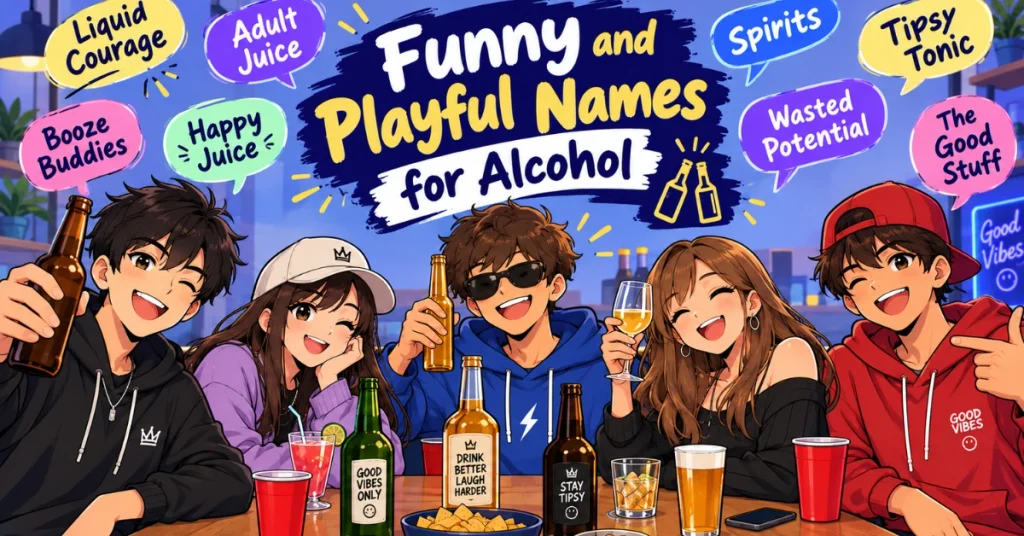
Some alcohol slang exists mainly to make a conversation sound funny rather than to provide a precise definition. Giggle juice, happy juice, party fuel, rocket fuel, devil’s brew, liquid gold, and medicine appear in playful contexts. These expressions are often humorous euphemisms, so their meaning depends heavily on the speaker and situation.
For example, calling a drink rocket fuel normally exaggerates how strong it feels, while giggle juice suggests that alcohol makes people laugh or become more social. Liquid courage similarly plays on the idea that drinking makes someone braver. These phrases work best in casual conversation, captions, jokes, or fictional dialogue not formal communication.
Slang for Drinking, Being Drunk, and the Morning After
Alcohol slang does not stop at the beverage itself. English has a large vocabulary for drinking and intoxication, ranging from mild terms such as buzzed and tipsy to stronger expressions such as hammered, wasted, plastered, sloshed, smashed, and sauced.
The distinction matters because these words can suggest different levels of intoxication. Buzzed usually indicates a relatively mild effect, whereas hammered or wasted implies heavy intoxication. For the aftermath, hangxiety describes anxiety associated with a hangover, while hair of the dog refers to the old idea of drinking again after a night of drinking.
Getting Drunk Slang
Getting drunk slang includes terms such as tipsy, buzzed, lit, hammered, wasted, sloshed, plastered, sauced, smashed, and blitzed. Some expressions are strongly associated with particular generations or regions, so they should not be treated as interchangeable. In particular, modern internet terms can also describe excitement rather than alcohol intoxication.
Hangover Slang
Common hangover slang includes hair of the dog, rough morning, wrecked, hangxiety, and death warmed over. These phrases range from fairly recognizable expressions to exaggerated humor. “Hangxiety” is especially useful for describing the anxious or uneasy feeling some people associate with the day after drinking, rather than the physical hangover alone.
Regional Drinking Lingo Across the United States
There is no single American vocabulary for alcohol. A term that sounds ordinary in one part of the country may sound old-fashioned, humorous, or unfamiliar somewhere else. Current slang guides point to regional differences involving homemade spirits, craft beer, party culture, and local bar vocabulary.
Generation matters, too. Someone might naturally say cold one or brew, while another speaker uses sauce or juice. Even online communities develop their own shorthand. That is why the safest definition for many alcohol slang terms is not “this always means X,” but “this commonly means X in this context.”
How Alcohol Slang Reflects American History and Culture
Some alcohol slang carries a surprising amount of American history. Moonshine and bootleg are strongly associated with Prohibition-era stories of illegal alcohol production and distribution. Speakeasy refers to hidden establishments where alcohol was sold during Prohibition, while bathtub gin became associated with homemade spirits.
Older expressions also survive because they are culturally memorable. Firewater and grog have historical associations, while nightcap developed from the idea of a drink taken before sleep. The interesting part is that slang preserves cultural memory: a single word can reveal something about a period, occupation, region, or social attitude toward drinking.
Bartender and Industry Slang You Won’t Find in a Dictionary
Bar culture has its own vocabulary, and not every term used behind a counter is technically slang for alcohol. Well drink generally refers to a mixed drink made with the establishment’s house liquor, while a call drink uses a brand specifically requested by the customer. Back can refer to a small accompanying drink served with a shot.
These distinctions can make ordering easier because they describe how a beverage is served rather than merely giving it a nickname. Top-shelf, well, call, neat, on the rocks, and chaser are therefore best understood as pieces of beverage and bar vocabulary, not interchangeable synonyms for alcohol.
How Music, Movies, and Social Media Shape Drinking Vocabulary
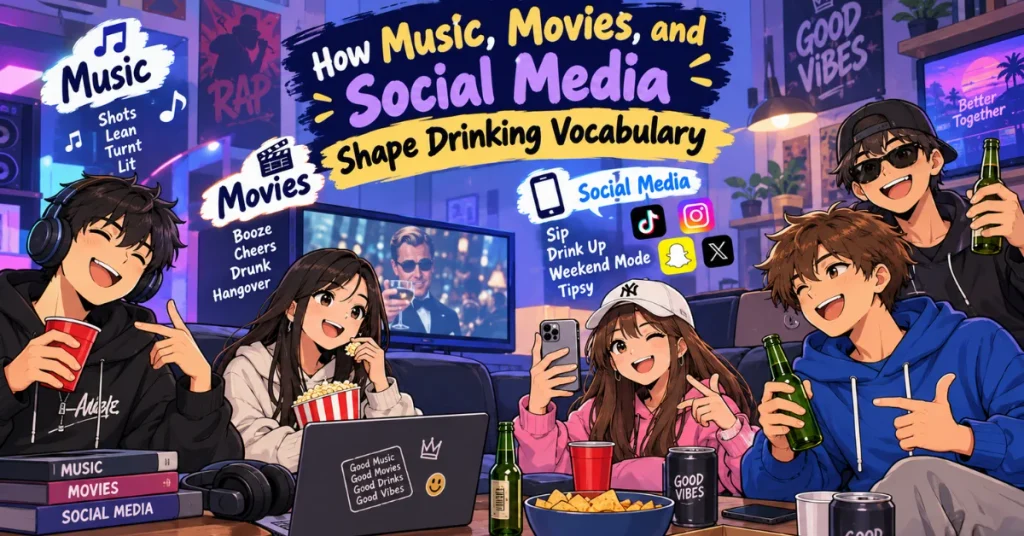
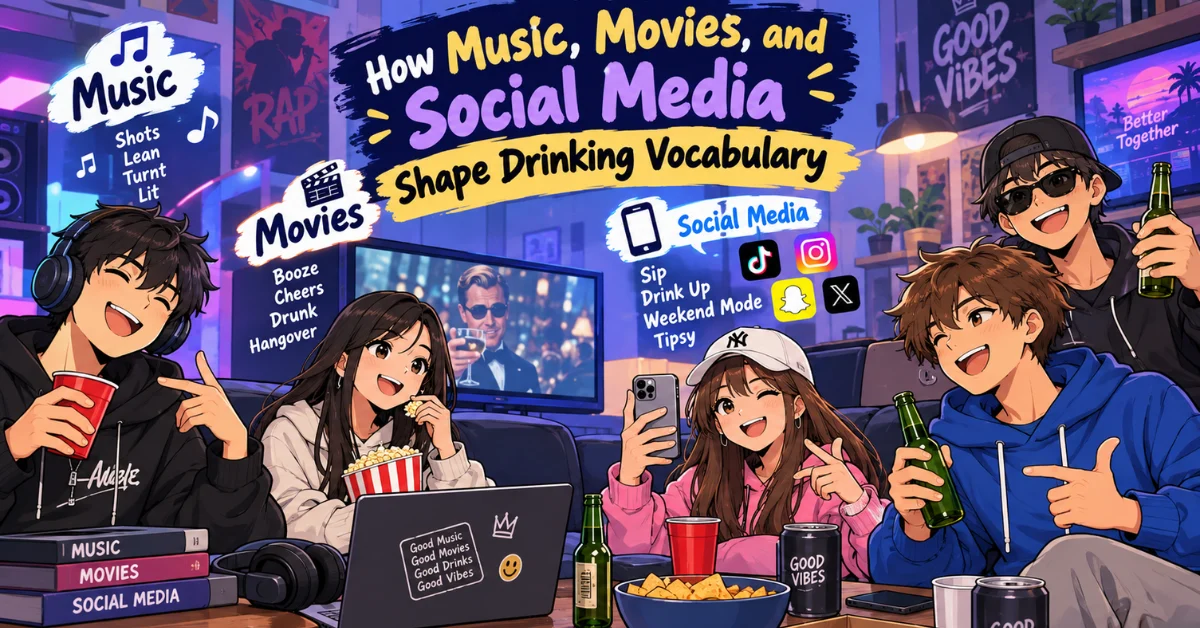
Alcohol slang spreads through culture as much as through dictionaries. Music, movies, television, memes, group chats, and social platforms can turn a niche expression into something widely recognizable. Current competitor research particularly identifies TikTok and online communication as accelerators for newer drinking vocabulary.
That rapid spread also explains why some terms feel temporary. A phrase can become popular online, appear in captions and memes, and then fade within a few years. Older words such as booze, hooch, and firewater have survived much longer because they have accumulated cultural meaning beyond a single trend.
Slang Etiquette: When It Helps and When It Hurts
Alcohol slang works best when it matches the audience. Saying cold one with friends at a casual barbecue sounds natural; putting the same phrase into a formal business email would sound out of place. Competitor research similarly emphasizes that age, setting, and relationship affect whether a slang expression feels authentic.
Another useful rule is not to overdo it. A sentence packed with booze, sauce, juice, giggle water, firewater, and rocket fuel can sound artificial. One well-chosen expression usually feels more natural than five. Slang should add personality to language, not make the speaker sound like they memorized a slang dictionary.
US vs UK Alcohol Slang
American and British drinking vocabulary overlap, but some everyday terms reveal where a speaker is from. Americans commonly say liquor, liquor store, pregame, and bar, while British English more commonly uses spirits, off-license, pre-drinks, and pub.
The same distinction appears with intoxication. Buzzed is familiar in American English, while British speakers may use tipsy or merry. Regional language is not a strict rule, though: words such as booze and hammered cross national boundaries and can be understood in both varieties of English.
Frequently Asked Questions
What is a slang word for alcohol?
Common slang includes booze, liquor, hooch, brew, sauce, and spirits.
What is Gen Z slang for drunk?
Gen Z may say wasted, lit, hammered, smashed, or buzzed.
What is Gen Z drinking instead of alcohol?
Common alternatives include mocktails, sparkling water, energy drinks, non-alcoholicbeer, and functional beverages.
How do you say drink in slang?
Slang for “drink” includes sip, booze, swig, chug, and have a drink.

Daniel Parker is a writer and language enthusiast with a passion for modern slang, internet culture, and the way people communicate online.
As the creator and contributor at posmeaningslang.com, Daniel focuses on making slang words, phrases, abbreviations, and online expressions easier to understand. His goal is to provide clear definitions, useful examples, and simple explanations that help readers understand the language they encounter every day.
Daniel enjoys exploring how language evolves across social media, texting, gaming, and online communities. He believes that understanding modern slang isn’t just about knowing words—it’s about understanding the context and culture behind them.
Through posmeaningslang.com, Daniel aims to create a helpful and easy-to-use resource for anyone looking to understand today’s slang and internet language.
Areas of Interest: Slang • Internet Language • Social Media • Modern Communication • Language & Culture