Sopranos Slang: 18 Italian-American Words & Meanings
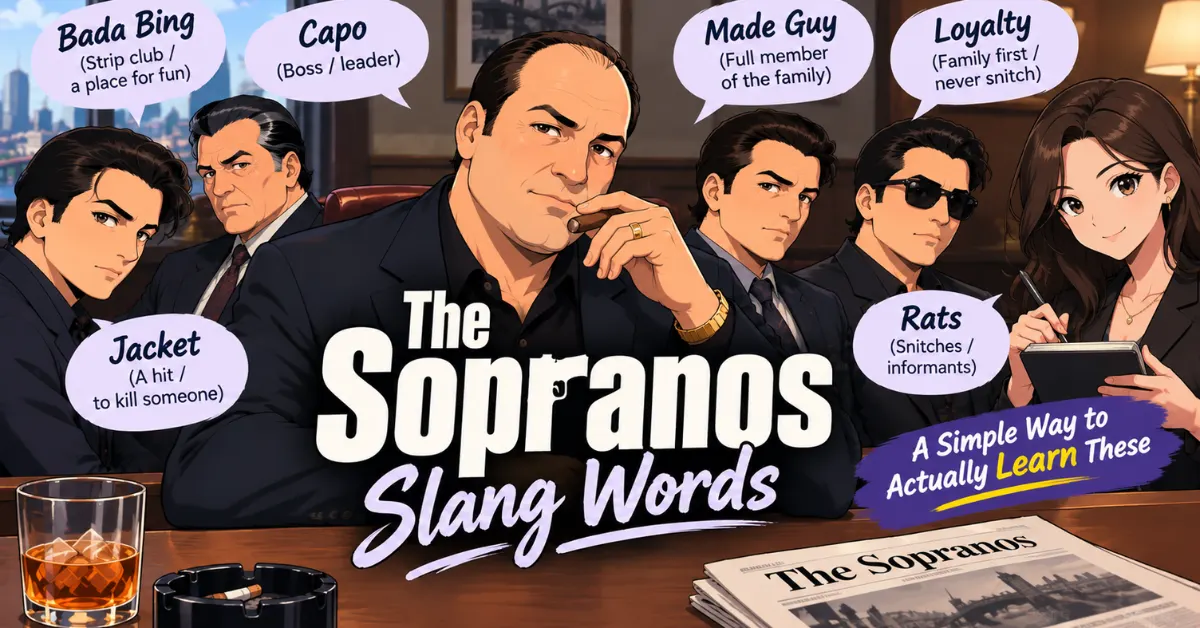
Sopranos slang is best understood as a mixture of Italian-American expressions, New Jersey speech, mob terminology, and memorable phrases used or popularized by The Sopranos. Some terms existed long before the series, while others became nationally recognizable because viewers heard them repeatedly from Tony Soprano and his crew.
The table below focuses on recognizable Italian American slang, mob vocabulary, food terms, and catchphrases rather than pretending every expression originated with the show. That distinction matters because words such as goombah have documented usage predating The Sopranos, while gabagool reflects a regional Italian American pronunciation.
| Term | Meaning | Typical Context |
| Gabagool | Capicola or capocollo | Food/pop culture |
| Goombah | Friend or associate | Italian-American usage |
| Goomah | Mistress | Mob/Italian-American context |
| Wiseguy | Mob-connected man or smart-mouth | Mob dialogue |
| Made Guy | Initiated mafia member | Organized crime |
| Capo | Crew leader | Mafia hierarchy |
| Whack | Kill | Mob terminology |
| Sit-down | Meeting to settle an issue | Mob negotiations |
| Rat | Informant | Betrayal/law enforcement |
| The Can | Prison | Criminal slang |
| Bust Someone’s Chops | Tease or hassle someone | Banter |
| Fuhgeddaboudit | Forget about it | Dismissal/emphasis |
| Bada Bing | Exclamation or emphatic phrase | Casual speech |
| Agita | Anxiety, irritation, or heartburn | Everyday expression |
| Madone | Exclamation of surprise or frustration | Emotional reaction |
| Omertà | Code of silence | Mafia context |
| Stugots | Vulgar reference to male anatomy | Crude humor |
| Cugine | Young or low-level associate | Mob vocabulary |
18 Famous Sopranos Slang Terms
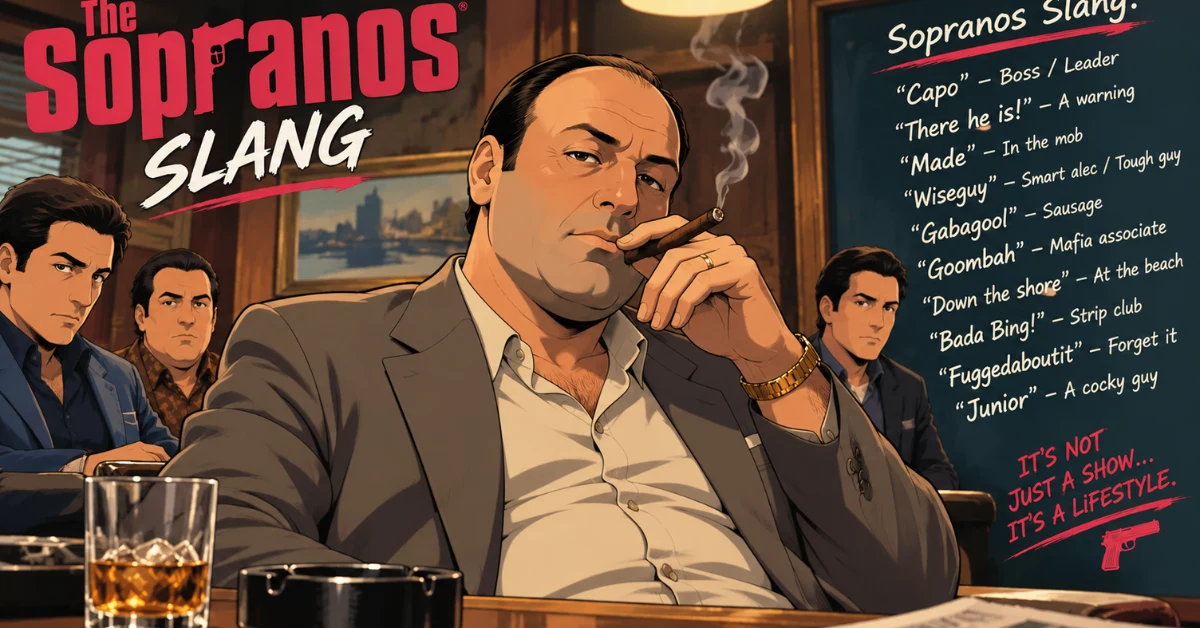
The most recognizable Sopranos slang is not limited to one linguistic category. Some expressions describe people or hierarchy, some come from Italian-American pronunciation, and others are English phrases associated with mob culture. HBO itself highlighted several of these expressions in its official Sopranos Dictionary.
What makes the vocabulary memorable is context. A word such as “wiseguy” can mean a smart-mouth in ordinary English but carry a more specific organized crime meaning in The Sopranos. Likewise, “gabagool” is a food term, not a secret mafia code word. That mixture gives the show its distinctive voice.
Gabagool
Gabagool is the famous Italian American pronunciation associated with capicola or capocollo, a cured pork product. The Sopranos helped make the pronunciation widely recognizable across the United States, turning an existing regional speech pattern into a pop culture catchphrase.
Goombah
Goombah can mean a close friend or associate, particularly among Italian American men. Merriam-Webster also records a mafia related sense and a potentially disparaging ethnic sense, so context matters. It is better treated as a culturally loaded word than as a harmless synonym for “buddy.”
Goomah
Goomah is an ItalianAmerican form associated with comare and is used in mob-related slang to mean a mistress. It became strongly associated with The Sopranos, but the expression predates the series and appears in other portrayals of Italian-American organized crime.
Wiseguy
A wiseguy can describe a smart-mouth or someone acting overly clever, but in organized-crime contexts it can refer to a mafia-connected man. That distinction is important because the word has an ordinary English meaning as well as a mob-related meaning.
Made Guy
A made guy is a formally initiated member of a Mafia organization. In The Sopranos, the expression carries social weight because becoming “made” represents status, loyalty, and recognition inside the fictional crime family.
Capo
A capo, short for caporegime, is a crew leader within a Mafia hierarchy. In The Sopranos, the title helps viewers understand that the organization has layers of authority rather than being a flat group of criminals.
Whack
Whack is mob slang for killing someone. It is strongly associated with crime fiction and organized-crime vocabulary and should generally be understood as a pop-culture term rather than casual language for real-world situations.
Sit-Down
A sit-down is a meeting intended to settle a dispute or negotiate between people within the mob world. The expression gives an ordinary meeting a much more serious tone when used in the context of The Sopranos.
Rat
A rat is an informant or someone accused of providing information to law enforcement. In the show’s world, the word represents one of the most serious accusations because loyalty and silence are central themes of the fictional organization.
The Can
The can is an informal expression for prison or jail. It is broader than The Sopranos, but the phrase fits naturally into the show’s criminal-world vocabulary when characters discuss incarceration.
Bust Someone’s Chops
To bust someone’s chops means to tease, hassle, or joke with them. Unlike some darker mob terminology, this expression frequently works as ordinary American banter and does not necessarily imply criminal activity.
Fuhgeddaboudit
Fuhgeddaboudit is a stylized pronunciation of “forget about it.” Depending on context, it can dismiss an idea, emphasize that something is impossible, or communicate that something is obviously excellent or settled.
Bada Bing
Bada bing is an expressive phrase used to suggest something happened easily, quickly, or as expected. The phrase existed before The Sopranos, but the series strongly connected it with its fictional Bada Bing club and Italian American mob imagery.
Agita
Agita describes anxiety, irritation, stress, or a feeling associated with heartburn. The expression comes from Italian American usage and fits Tony Soprano’s world particularly well because the show’s characters frequently discuss stress, frustration, and emotional pressure.
Madone
Madone, also written in related forms such as “marone” or “madonn,” is an emotional exclamation associated with surprise, frustration, disbelief, or dismay. HBO specifically included it in its Sopranos Dictionary.
Omertà
Omertà refers to a code of silence traditionally associated with organized crime, especially the refusal to cooperate with authorities. In The Sopranos, it represents loyalty and the consequences of betraying one’s associates.
Stugots
Stugots is a vulgar Italian-American expression associated with male anatomy. It is also famously used as the name of Tony Soprano’s boat, making it one of the show’s more memorable examples of crude humor and wordplay. HBO included it in its official vocabulary guide.
Cugine
Cugine is presented in the show’s vocabulary as a term for a young, lower level or aspiring mob associate. The word illustrates how The Sopranos uses language to communicate status, age, ambition, and belonging within its fictional criminal hierarchy.
Sopranos Slang: Why This Slang Even Exists
The language heard in The Sopranos is not simply “Italian slang.” It reflects Italian-American English, regional pronunciation, New Jersey and New York speech, organized crime vocabulary, and ordinary American expressions. The series uses these layers to make its characters sound socially and geographically specific.
Immigration and language contact also matter. Italian immigrants and their descendants developed distinctive pronunciations and expressions in American communities, while dialects from southern Italy influenced vocabulary and sound patterns. The result is not standard Italian spoken with an American accent; it is a more complicated linguistic mixture shaped by generations of cultural contact.
Sopranos Slang: The Words People Actually Ask About
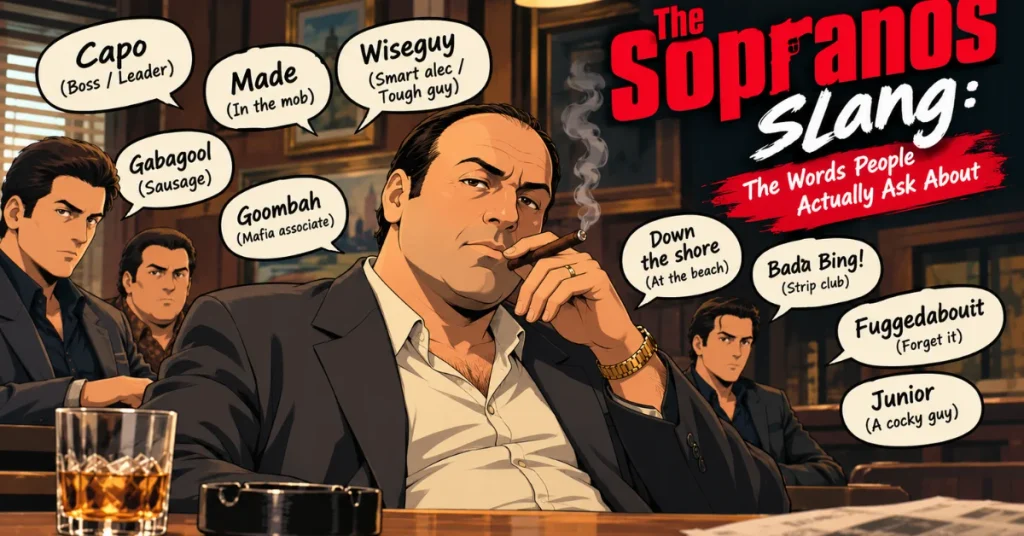
If you’re watching The Sopranos and wondering why characters say “gabagool,” “goomah,” “madone,” or “stugots,” you’re hearing vocabulary that often has a cultural history beyond the television series. HBO’s own dictionary confirms that several of the show’s famous terms required explanation for mainstream American viewers.
The most important distinction is between words the show invented, words it popularized, and words it simply used authentically. “Gabagool,” for example, reflects an Italian American pronunciation pattern that predates the series, while “goombah” has documented American usage dating back to the mid 20th century.
Generational Slang Comparison: Sopranos Slang
Younger audiences often encounter Sopranos slang through clips, memes, streaming, TikTok edits, and references rather than through the show’s original HBO broadcast. That changes how the expressions function: a phrase can be quoted ironically today without the speaker actually using it as everyday Italian American vocabulary.
Older viewers and Italian American communities may recognize some expressions as regional speech rather than “Sopranos language.” That distinction is important because the series did not invent Italian-American culture; it dramatized a particular fictional community and helped expose its vocabulary to a much wider audience.
How to Use Sopranos Slang Naturally Without Sounding Awkward
The easiest way to use Sopranos slang naturally is to treat it as a cultural reference rather than an accent costume. “Fuhgeddaboudit” or “bada bing” can work as playful pop culture jokes, but forcing several expressions into one conversation can quickly sound like an imitation instead of natural speech.
Context is especially important with culturally loaded expressions. A word may be friendly within one community and stereotypical or offensive when used by someone outside it. The safest approach is to understand the original meaning, recognize the tone, and use familiar expressions sparingly rather than trying to “sound like a mobster.”
Common Sopranos Slang Mistakes
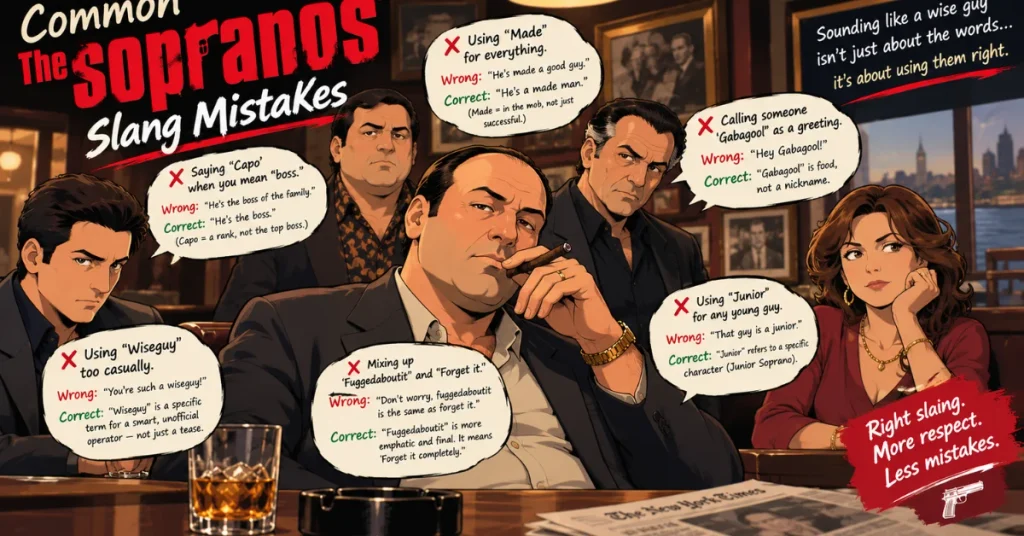
One common mistake is treating every term heard on The Sopranos as authentic Italian. The show’s dialogue includes Italian American dialect, English slang, mob terminology, regional expressions, and dramatic television language. Those categories overlap, but they are not interchangeable.
Another mistake is confusing similar-sounding words. Goomah and goombah, for example, have very different meanings. Likewise, “wiseguy” can refer to a smart-mouth in ordinary English or carry organized-crime associations in a specific context. Precision makes the vocabulary much easier to understand.
Italian American Slang: Sopranos Terms
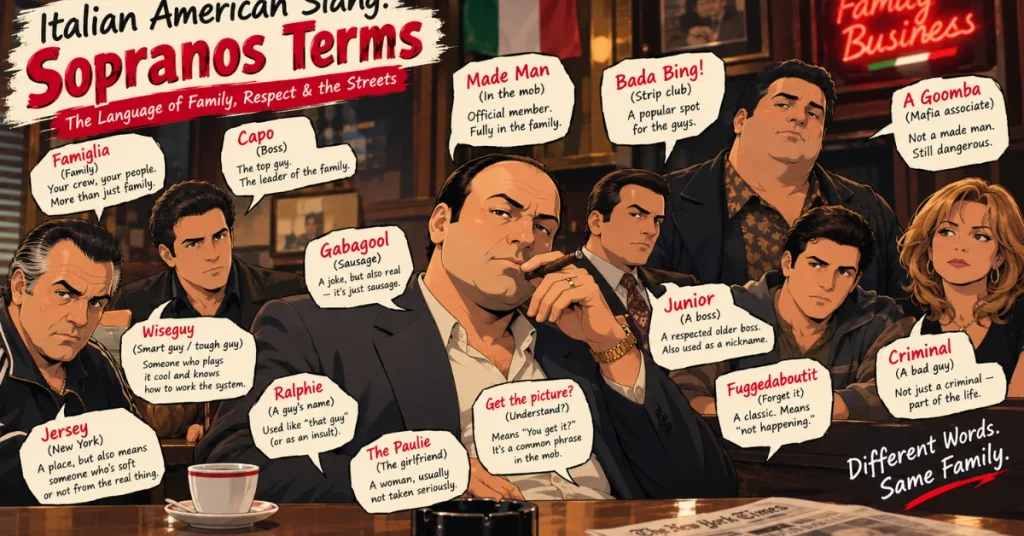
Italian American slang is broader than The Sopranos. The show drew from an existing cultural and linguistic environment and then amplified it through television. Expressions involving food, family, friendship, emotion, insults, and pronunciation all help establish the setting of North Jersey and the characters’ identities.
That is why gabagool is particularly interesting. It isn’t simply a funny word invented for television. Linguistic reporting has documented the pronunciation as part of Italian American speech patterns in the Northeast. The Sopranos made it famous, but its cultural history reaches beyond the series itself.
FAQ Section
What are the Italian slang words used in The Sopranos?
Common examples include gabagool, goombah, paisan, madonn’, and goomar.
What does “ugatz” mean in Italian?
“Ugatz” means “nothing” or “not a damn thing” in Italian-American slang.
What do Sopranos call their girlfriends?
They often use “goomar” or “goomah” for a girlfriend or mistress.
What are some common words used in mobster slang?
Common terms include wiseguy, made man, capo, consigliere, and rat.

Daniel Parker is a writer and language enthusiast with a passion for modern slang, internet culture, and the way people communicate online.
As the creator and contributor at posmeaningslang.com, Daniel focuses on making slang words, phrases, abbreviations, and online expressions easier to understand. His goal is to provide clear definitions, useful examples, and simple explanations that help readers understand the language they encounter every day.
Daniel enjoys exploring how language evolves across social media, texting, gaming, and online communities. He believes that understanding modern slang isn’t just about knowing words—it’s about understanding the context and culture behind them.
Through posmeaningslang.com, Daniel aims to create a helpful and easy-to-use resource for anyone looking to understand today’s slang and internet language.
Areas of Interest: Slang • Internet Language • Social Media • Modern Communication • Language & Culture