
Slang for Friend: 100+ Cool, Funny & Modern Terms for 2026
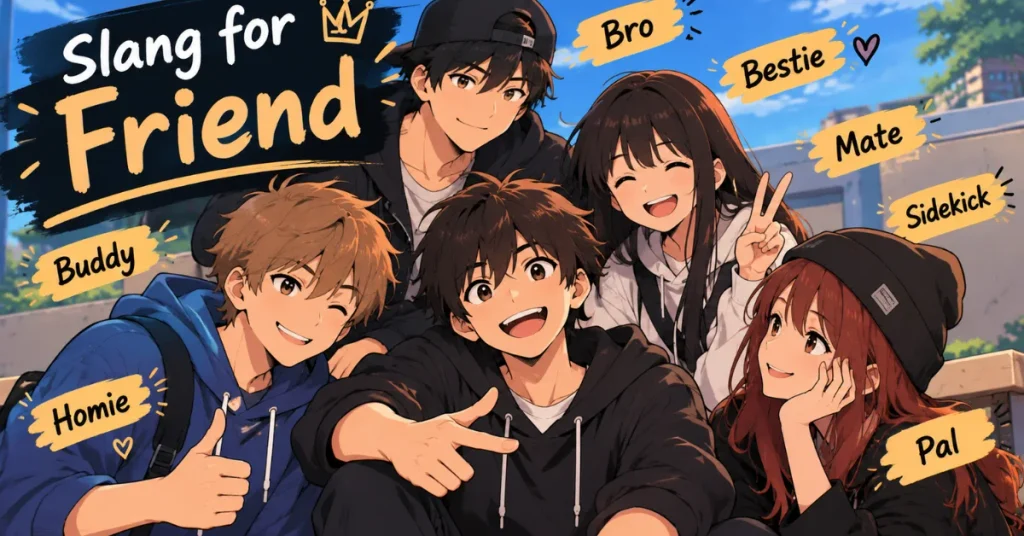
If you’re looking for slang for friend, the most natural American choices include bestie, buddy, bro, homie, pal, fam, BFF, and ride or die. Each expression carries its own tone, from warm and playful to deeply loyal. After comparing current slang references and modern usage patterns, I found that context matters just as much as the word itself. A term that sounds natural in a group chat may feel strange at work. Modern friend slang, Gen Z slang, texting slang, social media slang, and friend nicknames continue to evolve, but classic expressions still work remarkably well. The key is choosing language that matches your relationship, setting, and personality.
What Is Slang for Friends, and Why Does It Change So Fast?

Friend slang is informal language used instead of the ordinary word “friend.” Terms such as bestie, buddy, homie, bro, fam, and squad can communicate closeness, humor, loyalty, or belonging more quickly than the word friend itself. The meaning often depends on tone, context, and relationship.
Friendship vocabulary changes because language follows culture. Social media, music, gaming communities, group chats, and Gen Z culture can turn an expression into a widely recognized nickname surprisingly quickly. Some terms disappear, while others become everyday American English. That is why slang for friend can feel different from one generation or online community to another.
Classic Slang for Friends That Never Really Left
Some expressions have survived changing trends because they are easy to understand and comfortable in everyday American conversation. Buddy, pal, best bud, old pal, chum, and amigo can sound friendly without requiring knowledge of the latest internet trend. They work particularly well when you want casual language without sounding forced.
Buddy is warm and flexible, while pal can feel slightly more traditional. Best bud suggests a closer relationship, whereas amigo adds a Spanish-language flavor that is also familiar to many Americans. These classic friend nicknames are useful when you want something natural, recognizable, and less dependent on current Gen Z vocabulary.
Modern Friend Slang Gen Z and Millennials Actually Use
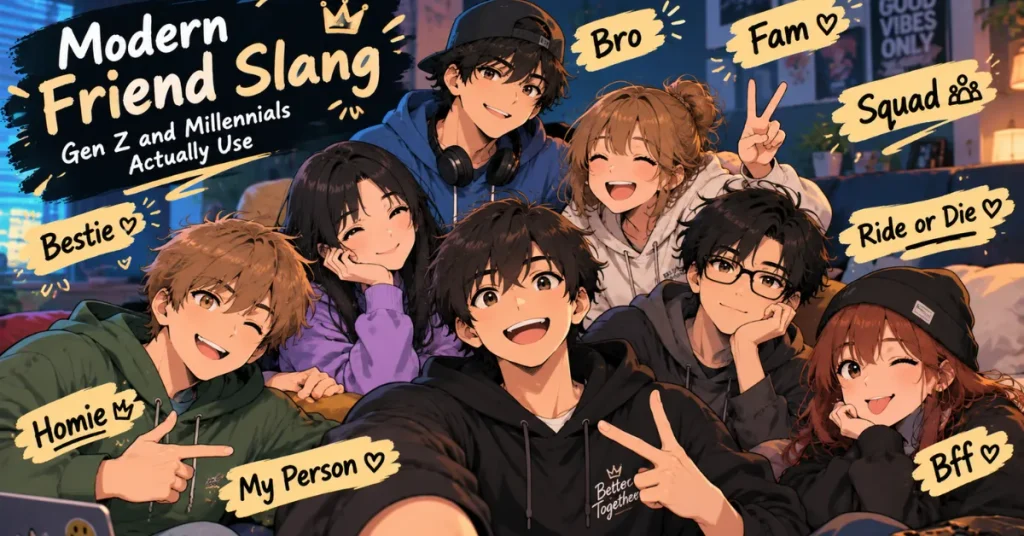
Modern friendship language often mixes older slang with expressions shaped by social media, texting, memes, gaming, and internet culture. Bestie, twin, OG, fam, day one, and ride or die can communicate a stronger emotional connection than simply calling someone a friend.
The important distinction is that modern slang does not always describe exactly the same relationship. Bestie usually signals closeness, while day one emphasizes history. Twin highlights similarity, and ride or die emphasizes loyalty. Understanding those subtle differences makes your friend slang sound much more natural.
Slang for Friends Who Show Loyalty
Some expressions specifically communicate trust and long-term loyalty. Ride or die, day one, OG, fam, and bestie can suggest that someone has remained important through difficult moments. They work naturally in heartfelt captions, personal messages, birthday posts, and conversations about long-term friendship.
For example, saying “She’s my day one” emphasizes shared history, while “He’s my ride or die” emphasizes unwavering support. Fam can go even further by suggesting that a close friend feels like chosen family. The right phrase depends on whether you want to emphasize history, loyalty, or emotional closeness.
Slang for Friends With a Playful Vibe
Not every friendship needs serious language. Twin, bruh, G, dawg, homie, and bestie can create a lighter, more humorous tone when friends are joking around. These expressions appear frequently in casual conversations, group chats, gaming communities, captions, and everyday banter.
Tone is crucial. “What’s up, bruh?” can sound completely different from “Thanks, bestie!” even though both address a friend. A word like dawg may feel relaxed and familiar, while twin suggests that two people share similar personalities, habits, interests, or humor.
British Slang Words for Mates and Besties
Although this article targets American readers, British expressions frequently appear online and in entertainment. Mate, bruv, blud, bezzie, and chum can refer to friends or companions, but their cultural associations differ from common American expressions such as buddy, bro, and homie.
For an American speaker, “mate” is usually recognizable because British and Australian English have spread widely through television, music, sports, and social media. However, regional slang should not be treated as interchangeable. British slang, American slang, and Australian slang can share words while giving them different cultural meanings.
Slang for Your Friend Group and Squad
When you mean several friends rather than one person, expressions such as squad, crew, gang, my people, framily, and the girls or the boys can fit naturally. These terms describe a social circle rather than a single relationship, making them especially useful for captions and group-chat conversations.
Squad often suggests a recognizable close-knit group, while crew is broader and can describe people connected through school, work, gaming, travel, sports, or hobbies. Framily, a blend of friends and family, emphasizes emotional closeness. The expression you choose can reveal whether you’re focusing on size, loyalty, identity, or shared activities.
Friend Slang for Every Type of Relationship
The best slang for friend depends on the relationship you are describing. A childhood friend may be your day one, a closest friend may be your bestie, and a loyal companion may be your ride or die. Different expressions highlight different dimensions of friendship.
Context also determines whether a term sounds natural. Someone you met yesterday probably should not automatically become your “ride or die.” Likewise, calling a professional contact your “homie” may feel inappropriate. Good slang reflects genuine familiarity rather than simply inserting trendy words into every conversation.
Guy Friends and Girl Friends

Traditional friendship slang sometimes separates terms by gender, but modern American usage is increasingly flexible. Bro, homie, dawg, G, sis, bestie, and twin can cross traditional gender boundaries depending on the speaker and social group.
For example, “She’s my homie” and “He’s my bestie” can both sound completely natural in casual American English. Bro can be used jokingly among many genders, while sis can express sister-like closeness. What matters most is the relationship and community in which the expression is being used.
Work Friends and Childhood Friends
Work friendships and childhood friendships often have different emotional histories. A longtime childhood friend may be called your day one, OG, bestie, or old pal, while a close coworker might be described casually as a work bestie or trusted friend.
These labels can communicate how a relationship developed. “Day one” emphasizes shared history, while “work bestie” identifies a close friendship formed through a professional environment. Because workplace communication can be more formal, use casual slang carefully when speaking with colleagues.
Texting and DM Slang Between Friends
Texting has made friend slang shorter, faster, and more expressive. BFF, bestie, fam, FRFR, IYKYK, and other abbreviations can appear naturally in messages, captions, comments, and group chats. Emojis also reinforce the emotional meaning of these expressions without requiring a long explanation.
A message such as “You’re my bestie fr” communicates familiarity and affection quickly. Meanwhile, “IYKYK” can signal an inside joke shared between friends. These expressions belong primarily to informal digital communication, so they are better suited to texting and social media than formal emails or professional messages.
Slang Terms to Use With Care (Origins and Respect)
Some friendship slang has meaningful cultural histories. Homie, fam, dawg, and related expressions have connections to African American English and hip-hop culture, while terms such as blud and some uses of bruv have histories connected to Black British communities and British music culture. Usage should be respectful rather than performative.
This matters because slang is not simply a collection of interchangeable trendy words. Language can carry cultural identity, regional history, and community meaning. If a term comes from a culture or community that is not your own, understand its context and avoid exaggerating an accent, caricaturing a community, or using the word as a costume.
US vs UK: A Quick Friend Slang Comparison
| American-friendly term | Closest UK expression | General meaning |
| Bro | Mate / bruv | Close or casual friend |
| Homie | Blud | Close friend |
| Bestie | Bezzie | Best friend |
| Buddy | Chum | Friend or companion |
| Squad | The lads / the girls | Friend group |
| Dawg | Bruv | Casual friend |
| Fam | Fam | Close friends or chosen family |
| Ride or die | Ride or die | Extremely loyal friend |
Regional slang is not always a perfect one-to-one translation. Mate is strongly associated with British and Australian English, while buddy is particularly familiar in North American English. Social media has spread many expressions internationally, but local tone and cultural context still matter.
How to Use Friend Slang Naturally
The easiest way to use slang naturally is to match the expression to the relationship and situation. Use bestie for warmth, buddy for friendly familiarity, homie for a close informal relationship, day one for shared history, and ride or die for serious loyalty.
Avoid forcing slang simply because it is trending. If nobody in your social circle says “bestie,” suddenly using it in every sentence may sound unnatural. Pay attention to how friends, coworkers, and online communities actually communicate. Natural friend slang sounds like something you would genuinely say not something copied from a vocabulary list.
FAQs About Friend Slang
What is Gen Z slang for friends?
Gen Z commonly uses bestie, besties, bro, bruh, homie, squad, and dawg for friends.
How do you say friend in UK slang?
Common UK slang includes mate, pal, lad, and bruv.
How do you say best friend in Gen Z?
You can say bestie, BFF, best bud, or my day one.
What can I say instead of “my friend”?
Try my bestie, my buddy, my homie, my mate, my bro, or my day one.

Daniel Parker is a writer and language enthusiast with a passion for modern slang, internet culture, and the way people communicate online.
As the creator and contributor at posmeaningslang.com, Daniel focuses on making slang words, phrases, abbreviations, and online expressions easier to understand. His goal is to provide clear definitions, useful examples, and simple explanations that help readers understand the language they encounter every day.
Daniel enjoys exploring how language evolves across social media, texting, gaming, and online communities. He believes that understanding modern slang isn’t just about knowing words—it’s about understanding the context and culture behind them.
Through posmeaningslang.com, Daniel aims to create a helpful and easy-to-use resource for anyone looking to understand today’s slang and internet language.
Areas of Interest: Slang • Internet Language • Social Media • Modern Communication • Language & Culture