Mississippi Slang: 20 Southern Words & Phrases to Know
Mississippi slang blends Southern expressions, local vocabulary, food terms, and colorful phrases that can sound completely unfamiliar to outsiders. From The Sipp and nabs to carry, catawampus, and bless your heart, these expressions reveal something about Mississippi culture and everyday Southern speech.
If you’ve ever heard a Mississippian say they’re going to “carry” somebody somewhere or ask for a “buggy,” you may have wondered what they meant. This guide breaks down the language in plain English, with real context and examples, while separating genuinely local terms from expressions shared across the wider South.
13 Mississippi Slang Words And Phrases!
Mississippi slang is not one perfectly uniform dialect. The state’s language reflects Southern English, regional traditions, food culture, family vocabulary, and local history. Some expressions are especially recognizable in Mississippi, while others are also common throughout the broader American South.
That distinction matters because a visitor may hear y’all, bless your heart, or high falutin’ in several Southern states. Meanwhile, terms such as nabs, carry, The Sipp, and slug can feel much more strongly tied to Mississippi experiences and local culture.
The Sipp
The Sipp is an informal nickname for Mississippi. It is short, casual, and easy to recognize in conversations about the state. The term appears in multiple Mississippi-focused slang lists, although even travel coverage notes that not every local necessarily uses or embraces it.
You might see it in phrases such as “down in the Sipp” or “back home in the Sipp.” It works more like a nickname than a secret code, giving Mississippi a relaxed identity marker that fits naturally into casual speech, music, social media, and regional conversation.
Comeback
Comeback refers to comeback sauce, a creamy Southern condiment strongly associated with Mississippi, especially the Jackson area. The sauce commonly combines mayonnaise, ketchup, hot sauce, and seasonings, creating a tangy mixture served with fried foods, seafood, sandwiches, and other Southern favorites.
Calling it simply “comeback” can confuse outsiders because they may expect a response in an argument rather than something on a plate. In Mississippi food culture, however, “pass the comeback” can make perfect sense. It demonstrates how regional vocabulary often grows from ordinary local experiences.
Carry
In Mississippi usage, carry can mean drive someone somewhere, rather than physically transporting an object. The Sun Herald gives the example of someone saying they will “carry mama to the doctor,” while Enjoy Travel similarly explains the expression as meaning to drive someone.
This is one of the most useful Mississippi expressions for outsiders to recognize because the literal meaning can cause confusion. If someone says, “Can you carry me to the store?” they usually are not asking you to pick them up and physically carry them they are asking for a ride.
Nabs
Nabs commonly means packaged sandwich crackers, especially crackers filled with peanut butter or cheese. The Sun Herald explains that the term has a historical connection to Nabisco’s peanut sandwich packets, although Mississippi speakers may use “nabs” for Lance ToastChee-style crackers today.
For someone unfamiliar with Southern food vocabulary, “I’m craving some nabs” can sound like an incomplete sentence. In Mississippi, the meaning is much clearer. It is a small example of how brand names, food products, and everyday regional habits can become part of local speech.
Cattywampus
Cattywampus describes something crooked, askew, out of alignment, or positioned incorrectly. Higher Language lists it among Mississippi slang expressions, while the Sun Herald gives related spellings such as caddywonked and catty wonkus.
Imagine a picture hanging sideways or furniture sitting at an awkward angle. A Mississippian might call it cattywampus rather than simply saying it is crooked. The word is broader than Mississippi, however, so it is more accurate to call it a Southern or regional expression that is familiar in Mississippi.
Dagnabbit
Dagnabbit is an old-fashioned exclamation used to express frustration, annoyance, or surprise. Higher Language includes it among its Mississippi slang terms and describes it as a softened expression rather than an especially harsh swear.
Its appeal comes from its exaggerated, almost cartoonish sound. Someone might say “Dagnabbit, I forgot my keys!” after making a small mistake. It has a folksy Southern flavor, but readers should not assume that Mississippi is its exclusive home; similar euphemistic expressions appear throughout American English.
Gosh-A-Mighty
Gosh-A-Mighty is an emphatic expression of surprise or amazement. Higher Language identifies it as a Mississippi phrase associated with unexpected situations. Its tone is generally playful or old-fashioned rather than aggressive, making it suitable for humorous storytelling and informal conversation.
You could imagine someone opening the door during a sudden storm and saying, “Gosh-a-mighty, look at that rain!” The phrase carries personality more than precise information. Like several expressions in this list, it belongs to a wider Southern and American conversational tradition rather than being exclusive to Mississippi.
High Falutin’
High falutin’ describes someone or something perceived as overly fancy, pretentious, or unnecessarily sophisticated. Higher Language connects the expression with people who act superior or show off their status, making it useful when poking fun at someone who is trying too hard to appear important.
A person might jokingly describe an expensive restaurant, elaborate outfit, or overly formal behavior as “high falutin’.” The expression can be teasing rather than genuinely hostile. Its value in Mississippi slang comes from the colorful way it turns criticism into something memorable and distinctly folksy.
Jackleg
Jackleg is used for an untrustworthy, shady, or unreliable person. Higher Language describes the term as referring to someone who may take advantage of others or behave dishonestly.
Because the word carries a negative judgment, context matters. Calling someone a jackleg is not the same as casually calling them quirky. It suggests that the speaker distrusts the person’s character or behavior. For visitors, understanding the tone is just as important as learning the dictionary definition.
Ketched Up
Ketched up is presented by Higher Language as a Mississippi expression for becoming caught up in something, particularly gossip or rumors. The unusual spelling reflects a pronunciation-based representation rather than standard formal English.
The phrase captures a familiar social situation: someone gets pulled into everybody else’s business and suddenly knows every detail of the latest drama. If a friend warns you not to get “ketched up” in gossip, the message is essentially to step back and avoid getting tangled in unnecessary trouble.
Puttin’ On The Dog
Puttin’ on the dog refers to acting showy, dressing up, or putting on an impressive display. Higher Language connects the expression with pretentious behavior and traces its use to an older American tradition of showmanship.
The phrase is colorful because its literal imagery has little to do with the figurative meaning. If someone suddenly arrives dressed far more formally than expected, a friend might joke that they are “puttin’ on the dog.” It works especially well in playful Southern storytelling.
Thang
Thang is a pronunciation-based Southern form of thing. Higher Language presents it as a flexible term capable of referring to objects, ideas, feelings, or practically anything being discussed.
You may hear “that thang” or “this thang” in casual speech where standard English would use “thing.” It should not automatically be treated as uniquely Mississippi, because the pronunciation occurs across Southern and African American speech varieties. Its meaning depends mostly on context and tone.
Hot Tamale
Hot tamale can be used as an informal expression of admiration for an attractive person. Higher Language identifies this usage in its Mississippi list while noting that interpretations vary among speakers and regions.
The phrase is playful and expressive, but it is not necessarily something you would use in every social setting. Calling someone a “hot tamale” can sound flirtatious or old-fashioned depending on the speaker. As with many slang expressions, your relationship with the listener matters as much as the words themselves.
Juke Joint
A juke joint is an informal venue associated historically with African American music and Southern nightlife, particularly blues traditions. Higher Language connects juke joints with Mississippi’s musical culture and describes them as places where people could experience music and everyday social life.
The term carries cultural history beyond simple slang. Mississippi’s connection to blues, music communities, and the Delta makes juke joint especially meaningful when discussing regional language. It is better understood as a cultural term with strong historical associations than as merely another casual synonym for nightclub.
Here are 7 Mississippi Slang Words To Sound Like A Local
Mississippi slang becomes especially interesting when food, transportation, geography, family life, and Southern manners overlap. Travel-oriented coverage highlights expressions such as The Sipp, comeback, nabs, carry, and slug, showing how local language often grows from things people encounter every day.
Some expressions also reveal why visitors can misunderstand Southern speech. “Carry,” for example, can mean drive someone, while “nabs” refers to sandwich crackers. These aren’t difficult words once explained, but without cultural context, a newcomer can easily interpret them literally and miss the intended meaning.
The Sipp = Mississippi
The Sipp is a casual nickname for Mississippi, and it appears in both the Sun Herald and Enjoy Travel’s Mississippi-focused coverage. It is essentially a shortened identity label for the state.
A visitor might encounter it in casual conversation, online posts, music, or local references. Because some residents may prefer simply “Mississippi,” it is best treated as an informal nickname rather than assuming every Mississippian uses it. That small distinction keeps your language natural rather than forced.
Comeback = Southern sauce
Comeback can refer to Mississippi’s famous comeback sauce, a creamy, tangy condiment traditionally built from ingredients such as mayonnaise, ketchup, hot sauce, and spices. Enjoy Travel compares it broadly with remoulade, while the Sun Herald identifies it as a Southern sauce.
The term makes most sense in a food setting. If somebody says “put some comeback on that,” they are probably talking about sauce, not an argument. This is a great example of how regional food culture can create vocabulary that sounds mysterious until you know what is on the table.
I’m cravin’ some nabs = Crackers
When someone says “I’m cravin’ some nabs,” they are talking about sandwich crackers, commonly filled with peanut butter or cheese. Enjoy Travel specifically uses the phrase as an example of Mississippi vocabulary, while the Sun Herald gives additional historical context for the word.
The expression feels particularly local because it combines a Southern-style pronunciation with a familiar snack. For outsiders, the important lesson is simple: don’t interpret “nabs” as a verb or random nickname. In this context, it points to a specific kind of packaged cracker snack.
Carry = Drive
Carry is one of the most confusing examples for visitors because standard English usually makes “carry” mean physically transport something. In Mississippi usage described by both major sources, it can mean drive someone somewhere.
So “I’ll carry you home” can mean “I’ll drive you home.” The distinction becomes obvious once you’ve heard it in context. Interestingly, a survey-based report about misunderstood state expressions also identified Mississippi “carry” as a term outsiders frequently interpret incorrectly.
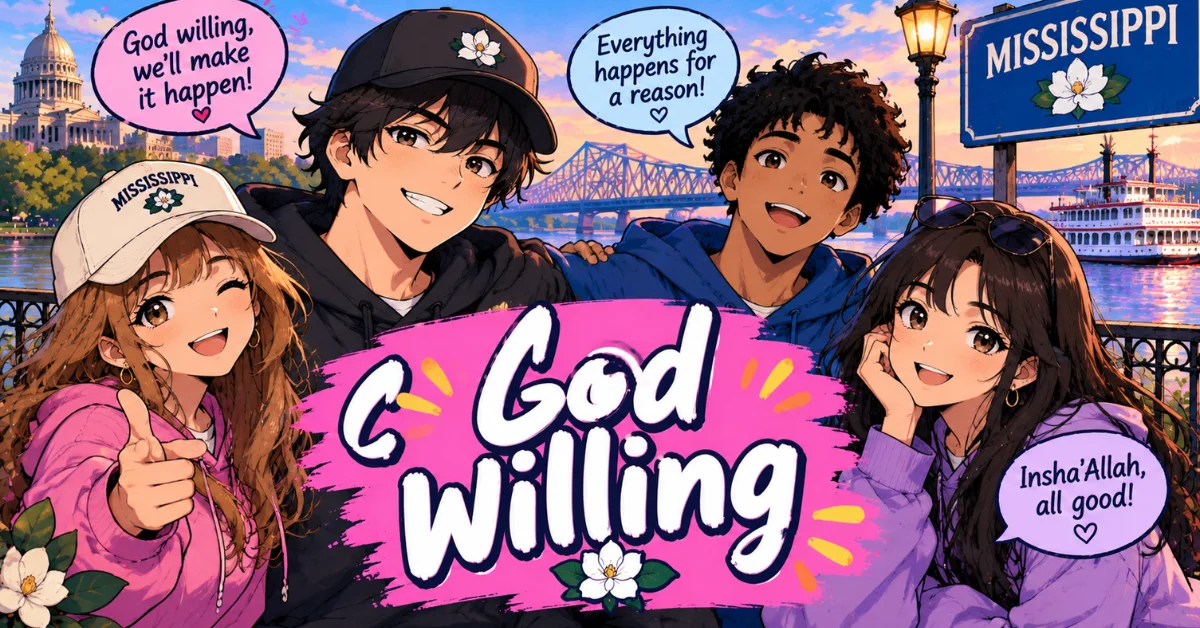
I’ll be there, good Lord willin’ and the creek don’t rise = God willing
“I’ll be there, good Lord willin’ and the creek don’t rise” expresses confidence mixed with acceptance that circumstances can change. Both the Sun Herald and Enjoy Travel include the phrase in their Mississippi coverage.
The expression carries a distinctly Southern storytelling rhythm. Someone might say it when promising to attend a gathering, visit family, or finish a plan. The meaning is essentially: “I expect to be there, unless something beyond my control prevents me.”
Slug = Slugburger
In Mississippi, slug can refer to a slugburger, a regional food associated especially with Corinth. Enjoy Travel describes it as a burger patty made with beef and fillers such as flour or soy meal, then cooked until well done.
This is a useful reminder that not every “slang” result is slang in the strict linguistic sense. Regional food vocabulary can become part of a state’s cultural identity. A recent 2026 Reddit discussion about Mississippi slug burgers also shows that the dish remains a subject of active contemporary conversation.
I’m being treated like a red-headed stepchild = Mistreated
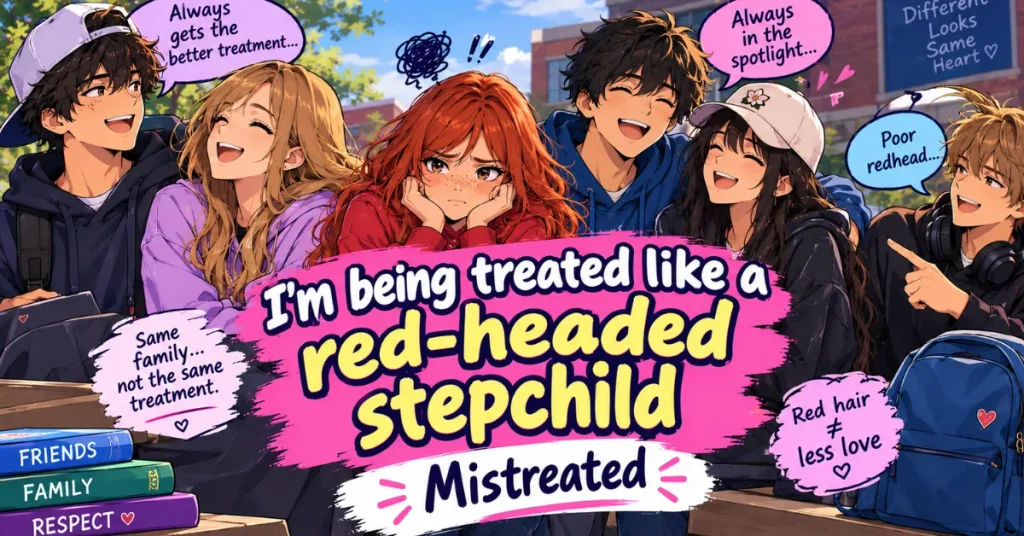
“Treated like a red-headed stepchild” describes feeling neglected, ignored, or mistreated. Both the Sun Herald and Enjoy Travel include the expression among Mississippi-related phrases.
It is worth recognizing that this expression is not exclusive to Mississippi. Its appearance in Mississippi slang lists reflects regional familiarity rather than exclusive ownership. When using it, remember that the phrase has an old-fashioned and potentially insensitive edge because it relies on a stereotype about stepchildren receiving poor treatment.
Conclusion: Mississippi slang is best understood as a lively mixture of Southern English, regional vocabulary, food culture, family expressions, local history, and phrases that have become recognizable in the Magnolia State. Some terms are strongly associated with Mississippi, while others belong to the wider South.
The easiest way to understand Mississippi slang is to listen for context rather than translate every word literally. When someone says they will “carry” you somewhere, asks for “nabs,” mentions “the Sipp,” or calls something “cattywampus,” the surrounding conversation usually reveals the meaning quickly. That is what makes regional language so memorable.
FAQ Sectio
What are some Mississippi sayings?
Common Mississippi sayings include “bless your heart,” “y’all,” “fixin’ to,” and “might could,” reflecting Southern speech and culture.
What are some hood slang words?
Examples include “homie,” “fam,” “bro,” “dawg,” “the hood,” and “no cap.” Meanings can vary by community and context.
What does it mean when someone calls you Mississippi?
Calling someone “Mississippi” is not a widely established slang meaning. It may be a nickname, reference to the state, or an inside joke depending on context.
What does “Mississippi” mean?
“Mississippi” usually refers to the U.S. state. The name comes from an Indigenous term commonly interpreted as meaning “great river.”

Daniel Parker is a writer and language enthusiast with a passion for modern slang, internet culture, and the way people communicate online.
As the creator and contributor at posmeaningslang.com, Daniel focuses on making slang words, phrases, abbreviations, and online expressions easier to understand. His goal is to provide clear definitions, useful examples, and simple explanations that help readers understand the language they encounter every day.
Daniel enjoys exploring how language evolves across social media, texting, gaming, and online communities. He believes that understanding modern slang isn’t just about knowing words—it’s about understanding the context and culture behind them.
Through posmeaningslang.com, Daniel aims to create a helpful and easy-to-use resource for anyone looking to understand today’s slang and internet language.
Areas of Interest: Slang • Internet Language • Social Media • Modern Communication • Language & Culture