Food Slang: 50+ American Terms, Meanings & Examples
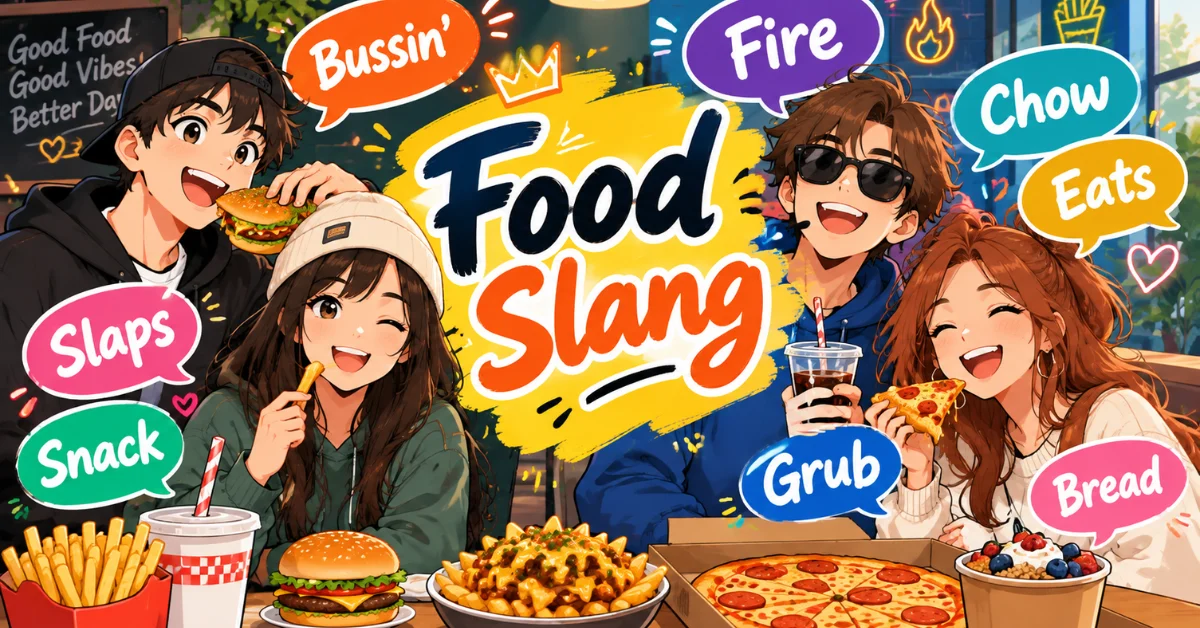
Food slang is informal language for meals, eating, taste, cravings, and food-related ideas, but it can also describe money, gossip, attraction, or conflict. In American English, words such as grub, chow, eats, bussin’, fire, slaps, snack, bread, and tea can sound confusing until context makes the meaning clear.
After researching current American usage and modern social-media language, I’ve found that the biggest challenge is knowing which expression fits which situation. This guide brings those meanings together, from classic American vocabulary to Gen Z and TikTok expressions, so you can understand food slang naturally instead of guessing.
What Is Food Slang and Why Do Americans Use It?
Food slang is casual language used around food, meals, snacks, eating, taste, and cravings. Terms such as grub, chow, eats, nosh, and bites make ordinary conversation feel relaxed, while expressions like bussin’, fire, and slaps add enthusiasm. The meaning often depends on tone and context.
Americans use these expressions because slang can make communication shorter, warmer, and more expressive. Saying “this burger slaps” communicates more emotion than simply saying it is good. Food slang also reflects generation, community, internet culture, regional speech, and changing American English.
Classic American Food Slang Words
Some food slang has survived well beyond internet trends. Grub means food, chow means food or a meal, eats refers casually to food, and nosh describes eating or a small meal. Vittles sounds older and more folksy, while “grab some grub” remains comfortably casual.
| Term | Meaning | Example |
| Grub | Food | “Let’s get some grub.” |
| Chow | Food or meal | “Time to chow.” |
| Eats | Food or meals | “They have great eats.” |
| Nosh | Small meal/snack | “I need a quick nosh.” |
| Bites | Small portions | “Let’s grab some bites.” |
| Vittles | Food, old-fashioned | “Plenty of vittles.” |
Food Slang That Means More Than Food
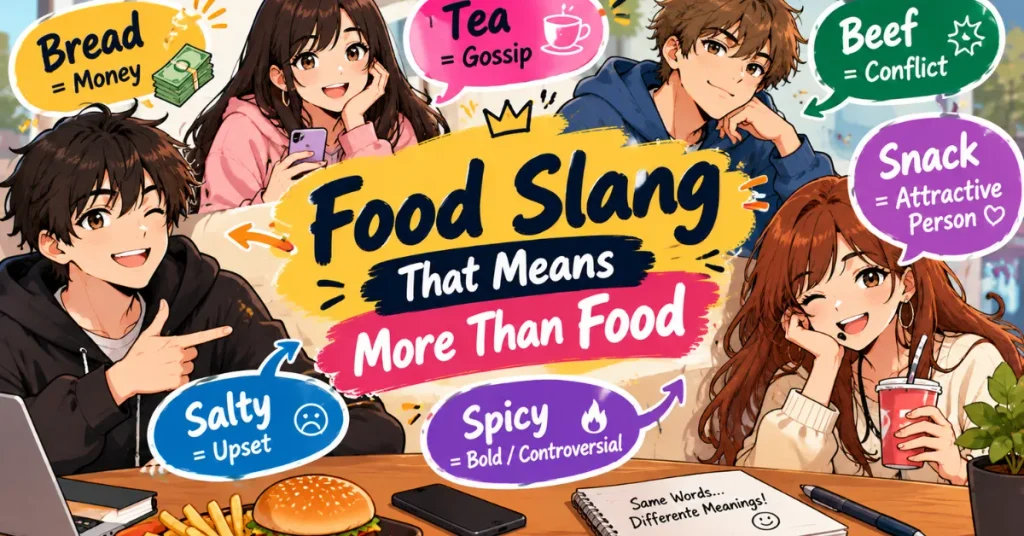
Some of the most useful food slang has nothing to do with eating. Bread can mean money, tea can mean gossip, and beef can describe conflict. Snack may describe an attractive person, while salty means annoyed or bitter. These meanings are especially common in casual online communication.
Context is everything. If someone says, “I need to make some bread,” they may mean earning money rather than baking. If someone asks, “What’s the tea?” they want information or gossip. This figurative side of food slang is one reason American English can feel surprisingly colorful.
Food Slang on TikTok and Social Media
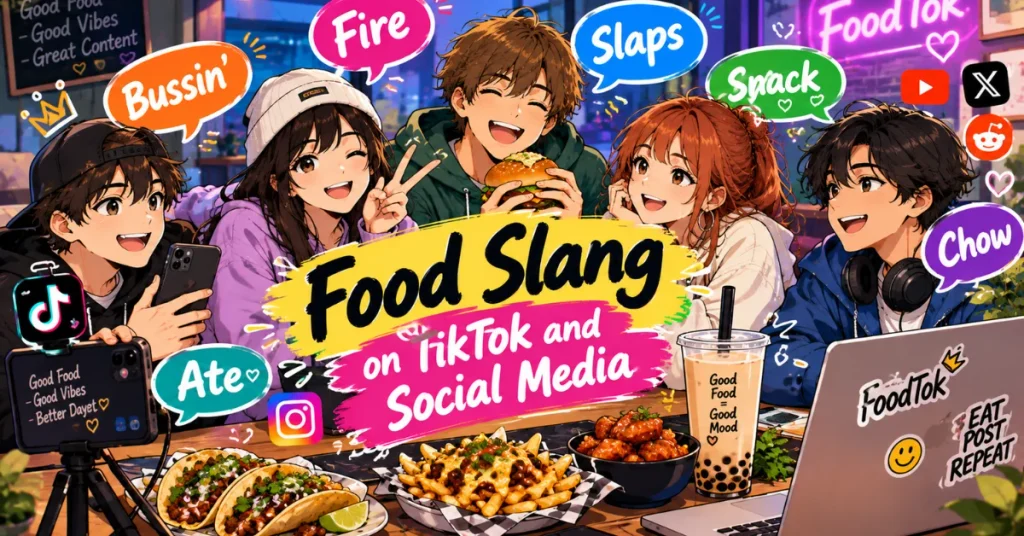
TikTok, Instagram, YouTube, Reddit, and other online communities accelerate the spread of food vocabulary. Expressions such as bussin’, fire, slaps, gas, ate, girl dinner, chef’s kiss, viral, and hits different frequently appear around food reviews, recipes, taste tests, and FoodTok content.
The catch is that online slang changes quickly. A phrase can become popular because of a meme or viral recipe and later lose its novelty. Current usage therefore matters more than assuming every term labeled “Gen Z slang” remains equally common forever.
American Food Slang You Will Hear Regularly
In everyday U.S. conversation, grub, eats, chow, nosh, bites, munchies, grab a bite, chow down, and hangry are useful examples. Younger speakers may also use bussin’, fire, slaps, or gas when reacting enthusiastically to food. Regional and generational differences still influence familiarity.
Here is a practical distinction: grub is a casual replacement for food; bussin’ praises taste; hangry combines hunger with irritability; and food coma describes feeling sleepy or sluggish after a large meal. Knowing these differences prevents awkward substitutions.
Southern Food Slang and Expressions
Southern American English has its own memorable food vocabulary. Terms such as fixin’s, vittles, chow-chow, maters, mess, and hankering reflect regional speech and culinary traditions. Some are food names, while others describe preparation, side dishes, quantities, or strong cravings.
Regional language is important because a phrase familiar in one part of the United States may sound unusual elsewhere. Food vocabulary often carries cultural history, family traditions, and local identity, so American food slang should not be treated as one completely uniform dictionary.
Food Slang by Generation
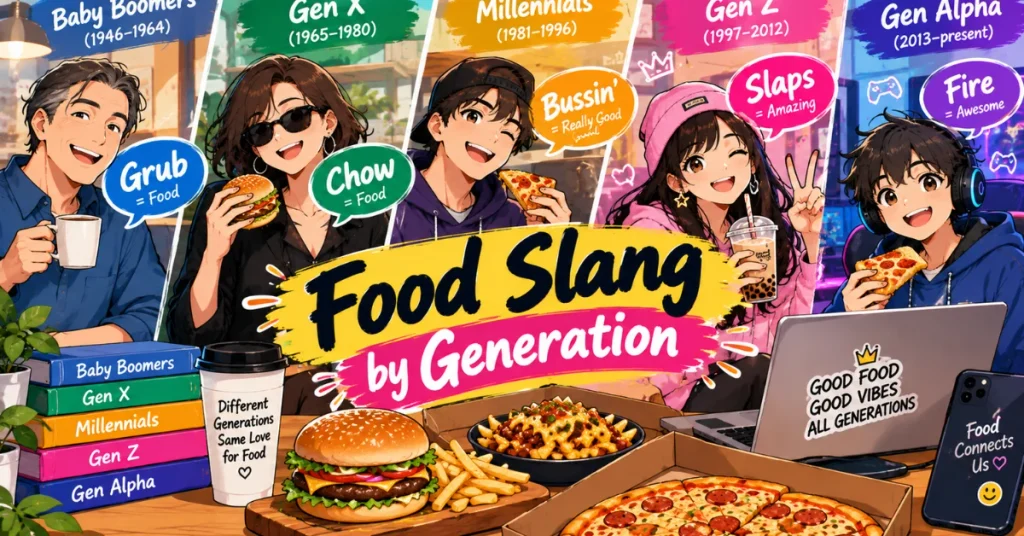
Food slang changes across generations, although the boundaries are never absolute. Older speakers may recognize grub, chow, vittles, and eats; Millennials may use foodie, hangry, food coma, and munchies; Gen Z internet culture commonly includes expressions such as bussin’, slaps, ate, and girl dinner.
These categories describe tendencies rather than rules. A Gen Z speaker can say “grub,” and an older American can understand or use “bussin’.” Slang travels between communities through music, television, social media, friends, and family, making generational labels useful but never perfect.
How to Use Food Slang Without Sounding Awkward
The easiest rule is to match the expression to the setting. Grub works naturally with friends, while bussin’ or slaps can fit casual texts and social posts. Professional emails, academic writing, and formal business communication usually call for clearer words such as delicious, flavorful, excellent, or satisfying.
Also, avoid forcing several trendy expressions into one sentence. Saying “This fire bussin’ food absolutely slaps” can sound more like imitation than natural speech. Learn the meaning, notice how real speakers use it, and let context determine whether the slang actually belongs.
Food slang conclusion: the most useful terms are not necessarily the newest ones. Grub, chow, and eats remain easy American expressions, while bussin’, fire, and slaps provide a more modern online tone. The safest way to understand any food-related slang is to consider the speaker, platform, region, generation, and surrounding sentence.
FAQ Section
What is the slang word for food?
Grub, chow, eats, or munchies.
What is Gen Z slang for food?
Grub, eats, munch, or noms.
How does Gen Z say “delicious”?
Bussin’, fire, or slap.
What is food in internet slang?
“Grub,” “eats,” “munchies,” or “nom.”

Daniel Parker is a writer and language enthusiast with a passion for modern slang, internet culture, and the way people communicate online.
As the creator and contributor at posmeaningslang.com, Daniel focuses on making slang words, phrases, abbreviations, and online expressions easier to understand. His goal is to provide clear definitions, useful examples, and simple explanations that help readers understand the language they encounter every day.
Daniel enjoys exploring how language evolves across social media, texting, gaming, and online communities. He believes that understanding modern slang isn’t just about knowing words—it’s about understanding the context and culture behind them.
Through posmeaningslang.com, Daniel aims to create a helpful and easy-to-use resource for anyone looking to understand today’s slang and internet language.
Areas of Interest: Slang • Internet Language • Social Media • Modern Communication • Language & Culture