

Paisa Meaning: The Real Difference Between Colombian and Mexican Slang

If you’ve ever heard someone say “paisa” in a Spanish-speaking community, you may have wondered what the word actually means. The Paisa meaning can change depending on the country and context, making it easy to misunderstand. In Colombia, “paisa” is strongly connected to regional identity, particularly people from Antioquia and the surrounding Paisa region
. In Mexico, the word can have a broader meaning, referring to a fellow countryman or someone from the same place. You may also encounter “paisa” in conversations, social media, music, and everyday slang. In this guide, we’ll explain the Spanish slang meaning of paisa, its cultural meaning, pronunciation, origins, examples, and key differences between Colombian andMexican usage.
What Does “Paisa” Mean? (Quick Definition)
At its core, “paisa” is a shortened form of the Spanish word paisano, which means “countryman,” “fellow countryman,” or “person from the same region.” The short version is used across Latin America, but its everyday meaning splits into two main tracks:
- In Colombia, “paisa” refers to someone from the Antioquia region, especially Medellín it’s a proud regional and cultural identity.
- In Mexico, “paisa” is a casual, informal way to refer to a fellow Mexican, often used by people living abroad (especially in the U.S.) to describe someone else from Mexico.
Both meanings share the same root idea belonging to the same “country” or “land” but they’ve evolved into very different everyday uses.
Paisa in Colombia Meaning & Origin
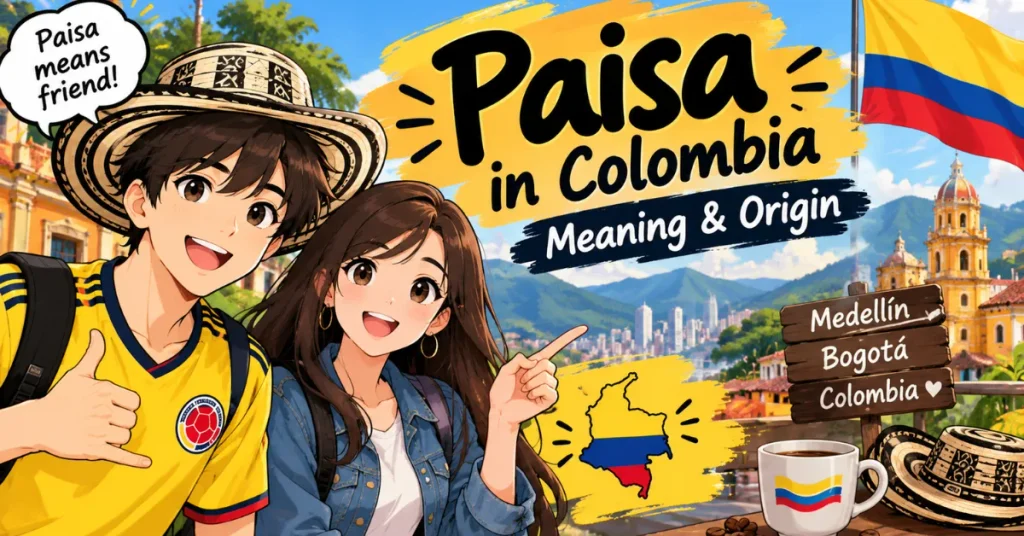
In Colombia, “paisa” is one of the most recognizable regional identities in the country. It refers to people from the Paisa Region, which mainly covers the department of Antioquia and parts of the Coffee Triangle (Eje Cafetero), including cities like Medellín, Pereira, Manizales, and Armenia.
The term traces back to paisano, but over generations it grew into something bigger than just a place of origin it became a cultural label tied to a distinct accent, work ethic, entrepreneurial reputation, and even a specific style of Spanish. Paisas are known across Colombia for their friendliness, strong regional pride, and a dialect full of unique expressions that outsiders often need time to get used to.
Being called “paisa” in Colombia isn’t just geography it’s identity. Locals will often ask “¿de dónde eres?” (where are you from), and answering “soy paisa” instantly tells the other person a lot about your accent, your hometown culture, and your regional pride.
Paisa in Mexican Slang How It’s Different
Cross the border into Mexican Spanish, and “paisa” takes on a completely different flavor. Here, it’s not tied to one specific region it’s used generally to mean “fellow Mexican” or “fellow countryman,” similar to how someone might say “homie” or “compatriot” in English.
You’ll hear “paisa” used most often:
- Among Mexican immigrants in the U.S. referring to other Mexicans they meet
- In casual greetings between strangers who share Mexican nationality
- As a friendly, informal way to build quick rapport (“¿Qué onda, paisa?”)
Unlike the Colombian usage, Mexican “paisa” doesn’t point to a specific state or city it’s about shared nationality, not shared hometown. It carries a warm, informal, community-based tone, often used the moment two Mexicans recognize each other away from home.
Paisa Colombia vs Mexico Key Differences
| Aspect | Colombia | Mexico |
| Meaning | Person from the Antioquia/Paisa region | Fellow Mexican countryman |
| Scope | Regional (specific area) | National (any Mexican) |
| Tone | Cultural pride, identity | Casual, friendly greeting |
| Common Context | Everyday self-identification | Used abroad, especially in the U.S. |
| Associated With | Medellín, Antioquia, Coffee Region | Mexican immigrant communities |
| Example Use | “Soy paisa, de Medellín” | “¿Qué tal, paisa?” |
The main takeaway: in Colombia, “paisa” answers the question “where in the country are you from?” In Mexico, it answers the question “are you from my country too?”
Paisa in Everyday Street Phrases
Hearing “paisa” in real conversation sounds very different from reading it in a dictionary. Here are common ways it shows up on the street in both countries:
Colombia (Antioquia/Medellín):
- “Soy 100% paisa” I’m fully paisa” (proud regional identity)
- “Ese manito habla bien paisaThat guy talks like a real paisa” (referring to the accent)
- “Aquí todo es muy paisa” “Everything here is very paisa” (describing local culture/style)
Mexico:
- “¿Qué onda, paisa?What’s up, fellow countryman?”
- “Ese paisa me ayudó bastanteThat fellow Mexican helped me a lot”
- “Aquí hay muchos paisas”“There are a lot of fellow Mexicans here” (often said by immigrants abroad)
Context is everything the same word carries pride and regional flavor in Colombia, while functioning as a quick, friendly nod to shared nationality in Mexico.
“Paisa Baby” What It Means in Chat & TikTok

If you’ve seen “paisa baby” trending in comment sections or captions, it’s a newer, informal spinoff mostly used in Mexican-American online slang. It’s typically used as an affectionate or playful nickname similar to calling someone “baby” plus adding “paisa” to signal cultural pride or connection.
You’ll mostly see it in:
- Instagram and TikTok captions from Mexican-American creators
- Comment sections where users tag friends as “paisa baby” playfully
- Music and meme culture tied to regional Mexican identity (corridos, banda, norteño scenes)
It doesn’t carry a strict dictionary meaning think of it as internet slang that blends cultural pride (“paisa”) with a term of endearment (“baby”), popularized through short-form video trends rather than formal language use.
Top Paisa Slang Words You Should Know
Since “paisa” in Colombia comes with its own dialect, here are commonly used Paisa Spanish (Medellín-region) slang words worth knowing:
- Parcero/a friend, buddy
- Que chimba that’s awesome/cool
- Bacano/a cool, nice
- Ñero/a informal term for someone from a rough neighborhood (context-dependent)
- Guaro aguardiente (a popular local liquor)
- Man vs. mona dude / blonde or light-haired woman
- Berraco/a tough, impressive, hardworking person
- Camello job or work
- Sisas / Nel yes / no (informal versions)
- Tombo slang for police officer
These words are heard constantly in Medellín and the broader Antioquia region, and knowing a few can instantly make conversations feel more natural.
Common Mistakes Non-Natives Make with “Paisa”
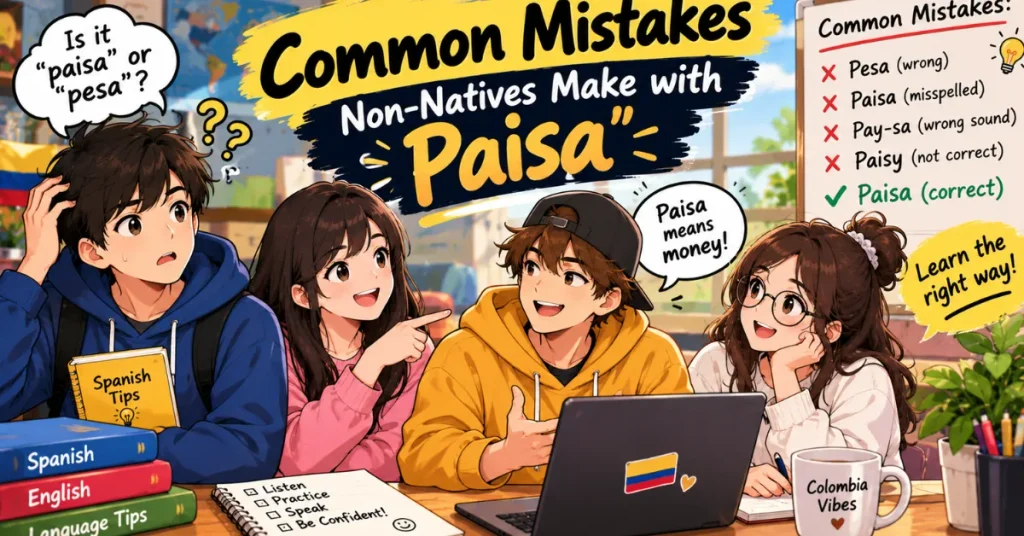
- Assuming it means the same thing everywhere. Using the Colombian regional meaning in a Mexican context (or vice versa) can cause confusion, since the word shifts meaning by country.
- Overusing it as a general “Latino” term. “Paisa” isn’t a catch-all word for any Spanish speaker it’s specific to shared nationality or, in Colombia, shared region.
- Mispronouncing the vowels. Non-native speakers often flatten the “ai” sound instead of pronouncing it like “eye.”
- Using it with the wrong tone. In Mexico, “paisa” is casual and friendly using it too formally can feel odd. In Colombia, it’s tied to identity, so using it dismissively can come across as disrespectful.
- Confusing “paisa” with “paisano.” While related, “paisano” is the fuller, more traditional word; “paisa” is the shortened, more colloquial version they’re not always fully interchangeable across contexts.
FAQs About Paisa Meaning
What does paisa slang mean?
In Mexican/Chicano slang, paisa commonly refers to a person from Mexico, especially someone associated with the country or Mexican culture.
What is paisa called in English?
It can be translated as “Mexican” or “person from Mexico,” depending on context.
What is the meaning of “paisa” in Urdu words?
In Urdu, پیسہ (paisa) means money, cash, or currency.
Who coined the term paisa?
No single person is known to have coined it; paisa has historical Spanish and regional linguistic roots.

Daniel Parker is a writer and language enthusiast with a passion for modern slang, internet culture, and the way people communicate online.
As the creator and contributor at posmeaningslang.com, Daniel focuses on making slang words, phrases, abbreviations, and online expressions easier to understand. His goal is to provide clear definitions, useful examples, and simple explanations that help readers understand the language they encounter every day.
Daniel enjoys exploring how language evolves across social media, texting, gaming, and online communities. He believes that understanding modern slang isn’t just about knowing words—it’s about understanding the context and culture behind them.
Through posmeaningslang.com, Daniel aims to create a helpful and easy-to-use resource for anyone looking to understand today’s slang and internet language.
Areas of Interest: Slang • Internet Language • Social Media • Modern Communication • Language & Culture