Cop Slang: What It Means in Text, Street Talk & More
Cop slang refers to the informal words and phrases people use when talking about police officers, law enforcement, or police-related situations. Some terms are common in everyday conversation, while others come from street language, pop culture, or online communities. Whether you’ve heard words like “five-o,” “the fuzz,” or simply “cop,” understanding their meanings can make conversations, movies, and social media posts easier to follow. In this guide, we’ll explore popular cop slang terms, what they mean, where they’re commonly used, and the context behind them.
What Does “Cop” Mean in Slang? Cop Slang
Cop slang usually means to get, grab, obtain, or buy something, especially in casual conversations about sneakers, clothes, tickets, games, or desirable products. I’ve seen this word create confusion because “cop” also commonly means a police officer. Context is what separates the two meanings.
In texting and social media, phrases such as “I’m gonna cop those shoes” or “Did you cop the tickets?” normally describe getting or purchasing something. The expression feels casual, conversational, trendy, and energetic, particularly around streetwear, sneaker culture, gaming, and online shopping.
Where Did “Cop” as Slang Come From? Cop Slang
The history of cop slang is older and more complicated than modern TikTok usage suggests. Dictionary sources trace the verb to older senses involving catching, seizing, or getting hold of something, while the police-officer noun is linked to “copper.” Merriam-Webster dates the police noun to the nineteenth century and the verb much earlier.
That history also explains why “cop” developed several expressions. Older uses include meanings connected with catching, obtaining, admitting, and taking. The popular explanation that COP means “Constable on Patrol” is generally treated as a false folk etymology rather than the established origin.
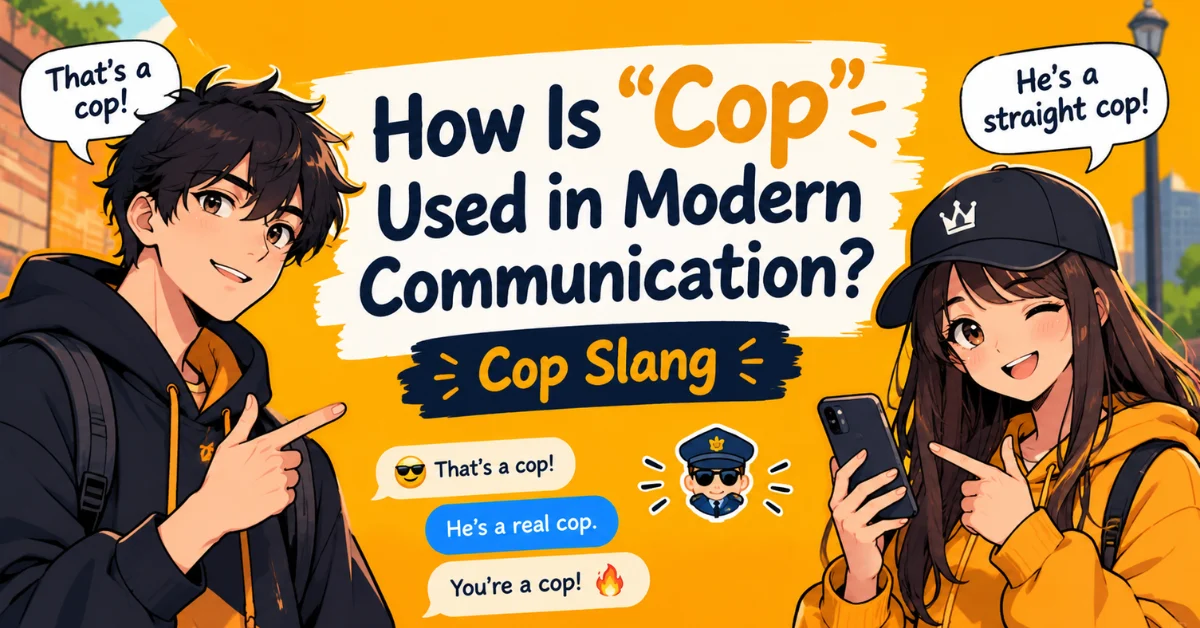
How Is “Cop” Used in Modern Communication? Cop Slang
Today, cop slang works mainly as an informal verb: someone can cop sneakers, tickets, clothes, a game, merchandise, or another desirable item. The meaning is usually closer to get, secure, or buy than simply “purchase,” which gives the word a more casual, energetic feeling.
You might see “cop” in a group chat before a sneaker release, in a TikTok caption about a new outfit, or in a gaming conversation about downloadable content. The surrounding object usually makes the meaning obvious: “cop the hoodie” suggests buying it, while “the cop arrived” points toward law enforcement.
Common Usage Examples:
“I’m going to cop those sneakers” means “I’m going to buy or get those sneakers.” “Did you cop the tickets?” asks whether someone successfully obtained tickets. “She copped the new phone” usually means she got or purchased it. The tense changes naturally: cop, copped, and copping are common forms.
Is It Always About Buying? Cop Slang
No. Cop slang can extend beyond shopping. Depending on context, “cop” can mean get, obtain, secure, catch, or take something. Merriam-Webster lists slang senses involving getting hold of something, capturing it, and stealing or swiping it, showing that “buy” is only one modern use.
For example, someone might say, “I copped the last seat,” meaning they successfully got it, without necessarily emphasizing a purchase. Dictionary.com likewise describes the verb in broader terms such as “grab” or “obtain.” Context therefore matters more than assuming every occurrence refers to shopping.
Related Slang Words Used Like “Cop” Cop Slang
Several casual words overlap with cop slang, although their tone isn’t identical. Snag suggests grabbing something quickly, score often suggests obtaining something desirable, grab is extremely ordinary, and secure can imply successfully obtaining something difficult to get. These alternatives help reveal the meaning.
| Slang or casual term | Common meaning | Example |
| Cop | Get, buy, obtain | “I copped the new shoes.” |
| Snag | Get quickly | “I snagged the last pair.” |
| Score | Obtain something desirable | “I scored tickets.” |
| Grab | Get or take | “I’ll grab one.” |
| Secure | Successfully obtain | “I secured the drop.” |
When to Use “Cop” and When to Avoid It Cop Slang
Use cop slang naturally in texts, group chats, social posts, fashion conversations, gaming communities, and casual conversations with people who understand informal language. It can sound lively and natural when discussing a product, opportunity, ticket, outfit, or limited release. Social Cat specifically frames the term as casual language for brands and creators.
Avoid relying on “cop” in formal academic writing, official reports, legal documents, or professional communication when a clearer word such as “buy,” “obtain,” or “purchase” would be appropriate. The word itself isn’t inherently offensive; the issue is primarily register and context. Dictionary sources classify the police noun as informal.
“Cop” in Music, Pop Culture, and Social Media Cop Slang
Cop slang fits naturally into music, sneaker culture, fashion, gaming, and social media because these spaces often discuss acquiring desirable or limited items. Modern slang sites specifically connect the term with streetwear, sneaker drops, TikTok, Instagram, gaming, and online communities.
Its appeal is partly about tone. “I bought the sneakers” simply describes a transaction. “I copped the sneakers” can suggest excitement, success, or participation in a particular culture. That extra attitude helps explain why the word remains useful in captions, conversations, product discussions, and casual digital communication.
Does Everyone Understand What “Cop” Means? Cop Slang
Not necessarily. The biggest source of confusion is that cop has an established second meaning: an informal word for a police officer. Oxford, Cambridge, Merriam-Webster, and Dictionary.com all recognize that meaning.
Consider the difference between “The cops are outside” and “I’m going to cop those shoes.” The first clearly concerns police; the second concerns obtaining something. If the surrounding words don’t make the intended meaning obvious, using “buy” or “get” may be clearer, especially when speaking with someone unfamiliar with slang.
Why “Cop” Is Popular in Modern Language Cop Slang
Cop slang is compact, expressive, and easy to use. Instead of saying “I’m going to purchase that limited-edition jacket,” someone can simply say, “I’m going to cop that jacket.” In fast-moving online conversations, that shorter expression communicates both the action and a sense of enthusiasm.
The word also fits cultures where obtaining something desirable is part of the conversation—sneakers, fashion drops, collectibles, games, tickets, and technology. Current social-media usage shows how brands and creators can use “cop” as a casual call to action, particularly when trying to create excitement or urgency.
Common Misconceptions Cop Slang
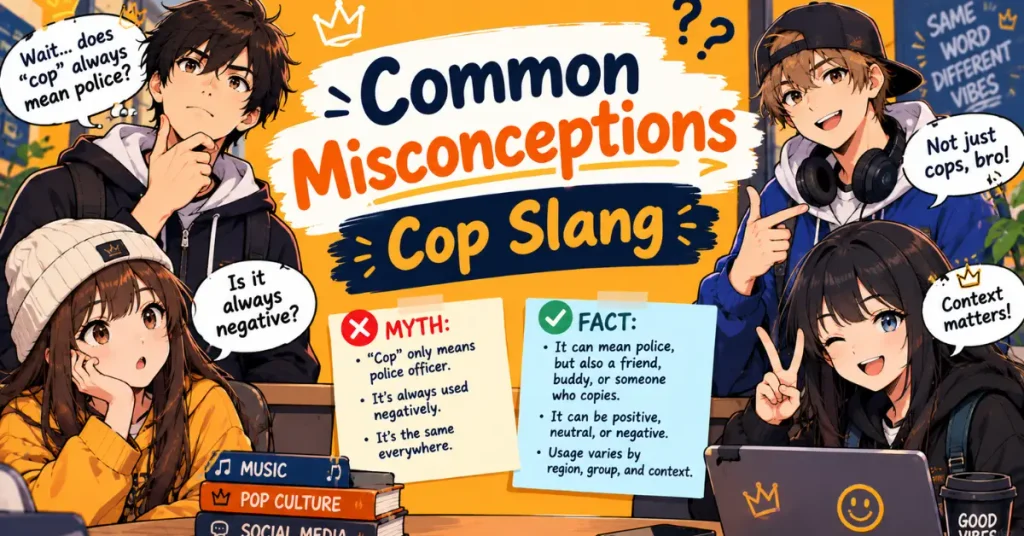
One common misconception is that cop slang always means “police officer.” It doesn’t. Another is that “cop” always means “buy.” It doesn’t either. Depending on the sentence, the verb can mean get, obtain, seize, catch, or acquire, while the noun can refer to a police officer.
A second misconception is that COP is an acronym for “Constable on Patrol.” Historical and dictionary evidence does not support that explanation. The police noun is generally understood as a shortening of copper, while the verb has an older history involving catching or seizing.
Practical Tips to Apply “Cop” Cop Slang
The easiest way to use cop slang naturally is to pay attention to the object that follows it. “Cop those shoes,” “cop the tickets,” and “cop that game” are immediately understandable in casual settings. The word works best when the conversation already has a relaxed, informal tone.
If you’re writing for a professional audience, replace it with buy, get, obtain, or purchase when clarity matters more than slang. If you’re writing a casual caption, talking with friends, or discussing fashion and gaming, “cop” can sound perfectly natural. Social Cat similarly recommends matching the term to the audience and communication style.
Cop Slang at a Glance
| Context | Meaning of “cop” | Example |
| Police | Police officer | “A cop pulled him over.” |
| Shopping | Buy/get | “I’m going to cop those shoes.” |
| Tickets | Obtain/secure | “Did you cop tickets?” |
| Gaming | Get/acquire | “I finally copped the new skin.” |
| Fashion | Buy/obtain | “She copped that jacket.” |
| Casual conversation | Get/grab | “I’ll cop one later.” |
| Formal writing | Usually avoid | Use “buy” or “obtain” instead |
FAQ Section
What does cop mean in Gen Z slang?
In Gen Z slang, cop can mean to get, buy, or obtain something. Example: “I’m gonna cop those shoes.”
What does cop mean in slang?
“Cop” commonly means to buy, get, or obtain something. It can also mean a police officer.
What is “cop it” in slang?
“Cop it” usually means get or buy it, depending on the context.
What is the slang term for a cop?
Common slang terms for a police officer include cop, five-o, the fuzz, and po-po.

Daniel Parker is a writer and language enthusiast with a passion for modern slang, internet culture, and the way people communicate online.
As the creator and contributor at posmeaningslang.com, Daniel focuses on making slang words, phrases, abbreviations, and online expressions easier to understand. His goal is to provide clear definitions, useful examples, and simple explanations that help readers understand the language they encounter every day.
Daniel enjoys exploring how language evolves across social media, texting, gaming, and online communities. He believes that understanding modern slang isn’t just about knowing words—it’s about understanding the context and culture behind them.
Through posmeaningslang.com, Daniel aims to create a helpful and easy-to-use resource for anyone looking to understand today’s slang and internet language.
Areas of Interest: Slang • Internet Language • Social Media • Modern Communication • Language & Culture