Slang for Boyfriend: 40+ Cute, Cool & Modern Terms
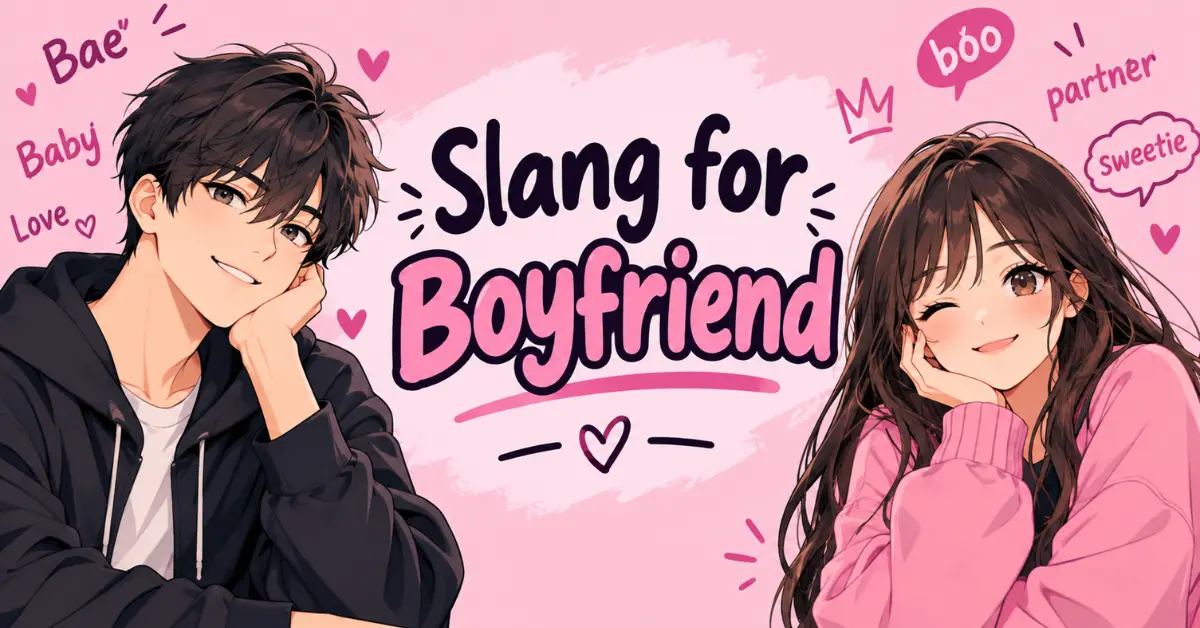
“Bae, boo, BF, boyf, my man, and my guy” are some of the common slang expressions people use for a boyfriend or romantic partner. If you’ve ever hesitated before typing a caption or introducing your partner because “boyfriend” sounded too formal, you’re not alone. Modern relationship language shifts quickly through texting, social media, music, and internet culture. Current slang guides show that some expressions remain widely recognized while others carry a more playful, generational, or old-school feel.
The best choice depends on tone, relationship, audience, and context. A longtime partner might naturally be your “hubby,” while a casual text could simply say “my guy.” Classic options such as bae, boo, babe, and honey remain familiar, while king, my person, and loverboy add different emotional flavors. The goal isn’t to sound trendy; it’s to choose a word that feels natural between you and your partner.
Bae
Bae is one of the most recognizable affectionate terms for a romantic partner. It can refer to a boyfriend or girlfriend and appears frequently in texting, captions, and casual conversation. Despite the popular “before anyone else” explanation, sources also connect it with shortened forms of baby or babe, so its exact origin is more nuanced.
Boo
Boo is a warm, affectionate term for someone you love or date. In American usage, it can describe either a boyfriend or girlfriend, making it gender-neutral in many contexts. It works especially naturally in casual conversation and romantic messages, although it can sound overly cute if the people involved don’t normally use pet names.
BF
BF is the straightforward texting abbreviation for boyfriend. Unlike a nickname such as boo or bae, it doesn’t necessarily communicate extra affection; its main advantage is convenience. You’ll commonly see it in texts, social posts, comments, and casual online writing where saving a few characters feels natural.
My Man
My man sounds confident, casual, and slightly possessive. It works particularly well when talking about your boyfriend to friends: “That’s my man.” Depending on tone, it can communicate pride, affection, loyalty, or simply identify the person you’re dating. Lets Learn Slang specifically notes its somewhat territorial flavor.
Hubby (Playful)
Hubby literally relates to “husband,” but people sometimes use it playfully for a boyfriend, especially in a long-term relationship. It can suggest that the relationship feels serious or marriage-like. Because of that implication, it may sound premature during the early stages of dating.
King
King is more of an admiring romantic nickname than a direct synonym for boyfriend. It can praise a partner’s kindness, confidence, effort, or behavior. In contemporary internet-oriented language, it can appear in captions or messages such as “My king,” giving the expression a supportive and complimentary tone.
My Guy
My guy is relaxed and conversational. It doesn’t sound as intensely romantic as “my love,” which makes it useful when talking casually with friends. Slangloom categorizes it as a chill expression associated particularly with younger online usage, although the phrase itself is broadly understandable.
Ride or Die
Ride or die describes a deeply loyal partner rather than simply meaning boyfriend. It emphasizes commitment, trust, and sticking together through difficult situations. The expression can sound dramatic, so it’s usually better suited to affectionate conversation, captions, or joking descriptions than formal introductions.
Loverboy
Loverboy suggests a boyfriend who is romantic, affectionate, or openly loving. It can also have flirtatious undertones depending on the context. Slangloom includes it among contemporary relationship expressions and describes it as playful or teasing rather than something you’d normally use in a formal setting.
Main Man
Main man identifies someone’s primary romantic partner. It has an older-school, confident flavor and can emphasize that a particular guy is the important person in someone’s dating life. Because slang changes across generations, it may sound less current than expressions such as my guy or my person.
Better Half
Better half is an affectionate phrase suggesting that your partner completes or complements you. It is gender-neutral, so it isn’t exclusively boyfriend slang. The phrase works well for established relationships, although Slangloom characterizes it as declining compared with newer casual expressions.
Baby
Baby is a classic romantic nickname rather than a modern internet-only slang term. Couples commonly use it directly when speaking to one another or when referring affectionately to a partner. Its simplicity is precisely why it continues to work: it communicates closeness without needing to sound deliberately trendy.
Babe
Babe is another familiar term of endearment. Compared with “baby,” it often feels slightly shorter and more casual, making it natural in everyday texting and conversation. It can refer to a boyfriend, girlfriend, or another person someone finds attractive, so context determines its exact meaning.
Prince
Prince gives a boyfriend a playful, romantic, almost fairy-tale quality. It suggests someone cherished, kind, or treated especially well. It isn’t among the most universally current boyfriend slang terms, but it can work nicely as a personal nickname when the relationship has that affectionate, sentimental tone.
Partner
Partner is broader and more neutral than boyfriend. It can describe a committed romantic relationship without specifying gender or marital status. This makes it particularly useful when someone wants relationship language that feels mature, private, or inclusive rather than emphasizing the word “boyfriend.”
Significant Other (SO)
SO is short for significant other and is commonly used in casual online writing. It refers broadly to a romantic partner rather than specifically identifying someone as a boyfriend. It is useful when privacy, neutrality, or simplicity matters, although it sounds less intimate than a pet name such as “boo.”
My Person
My person emphasizes emotional closeness rather than relationship status alone. Someone might use it when their boyfriend is also their closest companion or most trusted person. The phrase has a warm, sentimental quality and works particularly well in social captions or heartfelt conversations.
Heartthrob
Heartthrob describes an attractive man who inspires romantic interest, so it isn’t technically synonymous with boyfriend. A boyfriend can be called a heartthrob when you’re emphasizing his appearance or charm. It has a somewhat classic, pop-culture feel rather than sounding like current everyday texting slang.
Crush
Crush is an important distinction: a crush is someone you romantically like, but that person does not necessarily have to be your boyfriend. You might have a crush before dating begins. Once the relationship becomes established, “boyfriend,” “partner,” “bae,” or “boo” is usually more precise.
Boy Toy
Boy toy can describe an attractive man in a casual or joking romantic relationship, but it can also sound objectifying or dismissive. Because of that, it isn’t interchangeable with a neutral term such as boyfriend. Use it only when the people involved understand and are comfortable with its playful meaning.
Sweetheart
Sweetheart is a classic affectionate nickname for someone you love. It is less internet-driven than bae or my guy, but that can actually make it feel warmer and more timeless. Whether it sounds natural depends heavily on the couple and their usual style of communication.
Slang Words for Boyfriend (in Alphabetical Order)
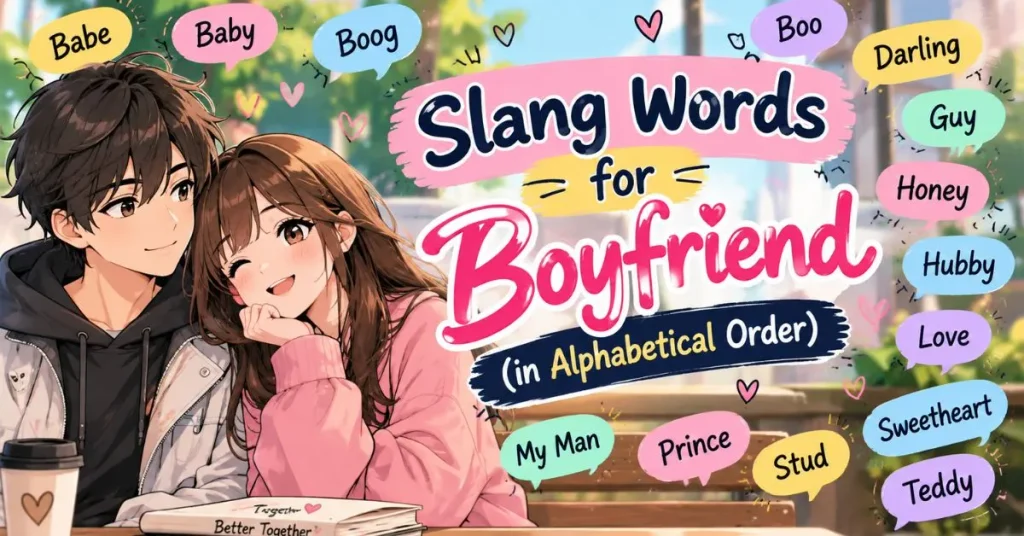
The alphabetical approach used by Lets Learn Slang is useful when someone isn’t looking for one particular trendy word but wants to browse possibilities. Its list ranges from everyday terms such as baby and bae to more niche expressions such as hobeau and the mister.
B
The B group contains some of the most recognizable relationship vocabulary: baby, bae, beau, BF, boo, boyf, and boyfy. It also includes expressions whose meanings need context, such as baby daddy and boy toy. That distinction matters because not every boyfriend-related expression means exactly the same thing.
D
The D section contains daddy, which can be a romantic or sexually suggestive nickname rather than a straightforward synonym for boyfriend. Because its meaning is strongly context-dependent, it shouldn’t be presented as a universally interchangeable replacement for “boyfriend.”
F
The F section includes flame, an older expression connected with a romantic relationship. Unlike newer internet slang, it has a literary or old-fashioned flavor. You might encounter it in phrases such as “old flame,” where the emphasis is on a past or romantic connection rather than a current boyfriend specifically.
H
The H section includes hobeau, honey, and hubby. “Honey” is a broad affectionate term, while “hubby” implies a husband-like relationship. “Hobeau” is a playful word formed around “hobo” and “beau,” making it more humorous and niche than mainstream boyfriend slang.
M
The M section centers on my man, a casual way of identifying a boyfriend when speaking with other people. Its possessive or territorial flavor can make it sound confident and playful, but the tone depends heavily on delivery and the relationship between the speakers.
P
The P section includes papi and partner. “Papi” carries Spanish-language and cultural context and can be an affectionate romantic nickname, while “partner” is much broader and neutral. Neither should be treated as a universal direct replacement for boyfriend in every situation.
S
The S section includes significant other/SO and squeeze. “SO” is neutral and relationship-focused, while “main squeeze” is a more playful slang expression for a primary romantic partner. These terms can work when someone wants something less formal than “boyfriend.”
T
The T section contains the mister, a playful way to refer to a boyfriend or husband when talking about him to someone else. It has a deliberately casual, slightly humorous feel, making it better suited to conversation than formal writing.
Quick Reference Table
| Slang term | Meaning / vibe | Best context |
| Bae | Affectionate romantic partner | Texting, captions |
| Boo | Sweet romantic nickname | Casual conversation |
| BF | Short for boyfriend | Texts, online |
| Boyf | Shortened boyfriend | Casual texting |
| Boyfy | Cute shortened boyfriend | Playful texting |
| My man | Confident boyfriend reference | Talking with friends |
| My guy | Relaxed boyfriend reference | Casual conversation |
| Hubby | Husband-like boyfriend | Long-term relationship |
| King | Admiring nickname | Praise, captions |
| Loverboy | Romantic/affectionate guy | Playful conversation |
| Partner | Neutral romantic partner | Mature/general contexts |
| SO | Significant other | Online/general use |
| Main squeeze | Primary romantic partner | Playful slang |
| Beau | Old-fashioned boyfriend | Traditional/romantic tone |
| My person | Deeply important partner | Sentimental captions |
This comparison combines recurring terms across the three competitors while distinguishing direct boyfriend references from broader relationship expressions.
Generational Slang Comparison
Slang does not stay fixed. Slangloom specifically separates contemporary usage by generation, associating Gen Z with expressions such as bae, king, and my guy, while describing terms such as boo, ride or die, and better half as more associated with Millennials. It also notes that older generations may favor expressions such as sweetheart, lover, or partner.
That doesn’t mean one generation exclusively “owns” a word. Slang overlaps heavily across ages, and people often choose expressions based on personality rather than demographics. A 20-year-old can say “sweetheart,” and someone older can absolutely say “bae.” Context and personal style matter more than rigid age labels.
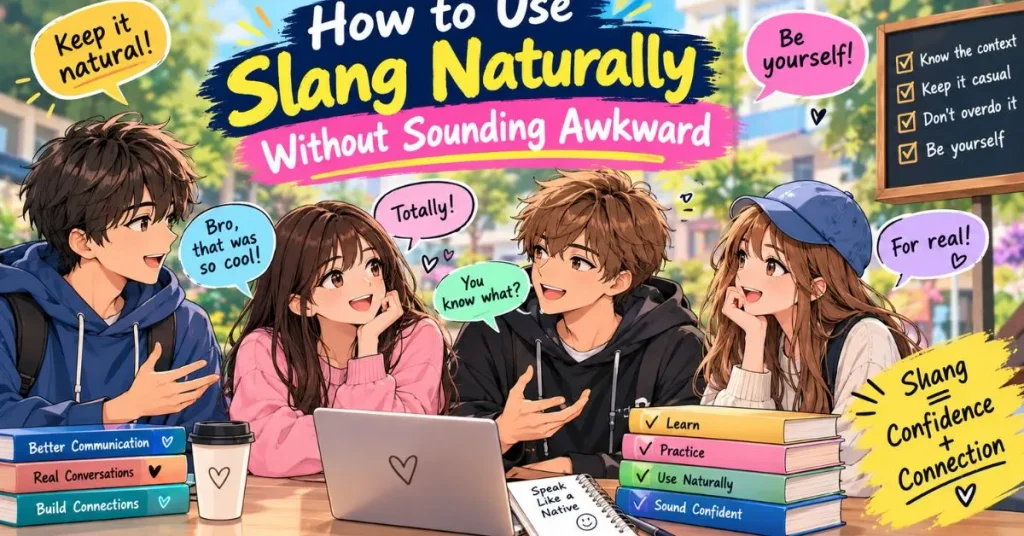
How to Use Slang Naturally Without Sounding Awkward
Match the Tone
A romantic nickname should fit the emotional moment. Bae, boo, baby, and babe can feel affectionate, while my guy sounds more relaxed. If the expression feels unlike the way you normally speak, forcing it into a conversation can make an otherwise sweet message sound unnatural.
Understand the Context
Some words carry meanings beyond boyfriend. Crush can describe someone you haven’t dated, while partner can refer to a serious relationship without specifying boyfriend or girlfriend. Understanding those distinctions helps you choose language that accurately describes your relationship.
Consider the Social Setting
Slang belongs primarily in informal situations. A nickname such as boo might be perfect in a text to your partner but inappropriate in a professional email. Even neutral terms such as BF are generally better suited to casual writing than formal communication.
Common Slang Mistakes
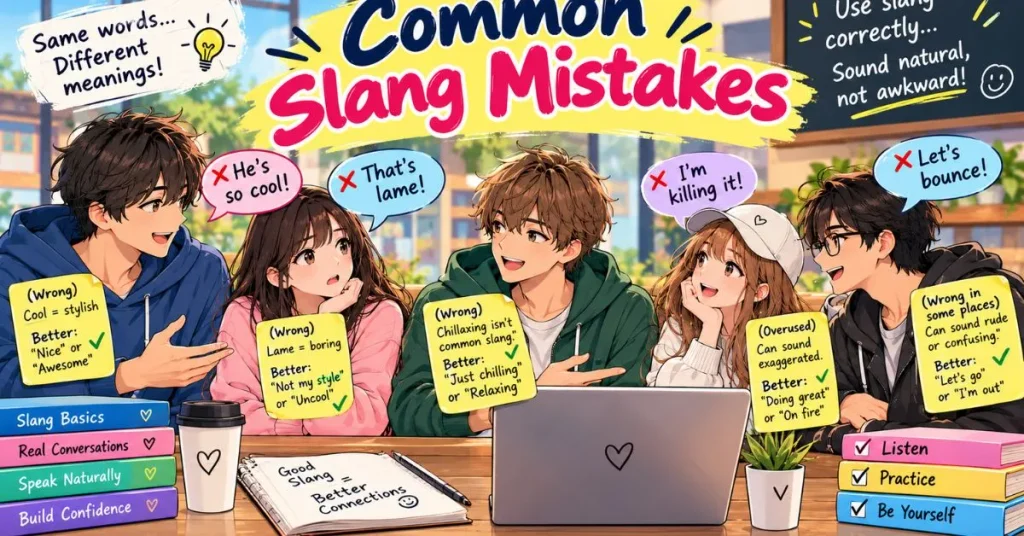
One common mistake is assuming that every romantic nickname means exactly boyfriend. Words such as bae and boo can refer to either romantic partner, while crush can describe someone who isn’t a partner yet. Another mistake is treating outdated or niche expressions as if everyone uses them.
Another issue is forcing slang because it sounds trendy online. The most natural expression is usually the one that fits your relationship. If “my guy” sounds normal to you, use it. If “my love” feels more authentic, there’s no SEO algorithm or social rule that says you need a trendier word.
Practice Section
Fill in the Blanks
Try these naturally: “I’m going to the movie with my tonight”; “He is such a because he’s always romantic”; “That’s my ”; or “My surprised me with flowers.” The answers could include guy, loverboy, man, bae, boo, or another term depending on the intended tone.
Choose the Correct Slang
If you want a term emphasizing loyalty, ride or die fits better than BF. If you’re emphasizing emotional closeness, my person works well. For straightforward texting, BF is the clearest choice. For an affectionate nickname, bae or boo is more natural.
Rewrite in Slang
A sentence such as “My boyfriend is picking me up tonight” could become “My guy is picking me up tonight,” “My boo is picking me up tonight,” or “My bae is picking me up tonight.” Each version changes the emotional flavor slightly while preserving the basic meaning.
FAQs
What does Gen Z call a boyfriend?
Bae, boo, my man, or my person.
What is a flirty word to call a man?
Handsome, hottie, babe, or stud.
What can I say instead of “boyfriend”?
Partner, significant other, bae, boo, or my man.
What is Gen Z slang for love?
Bae, boo, luv, or lovebug.

Daniel Parker is a writer and language enthusiast with a passion for modern slang, internet culture, and the way people communicate online.
As the creator and contributor at posmeaningslang.com, Daniel focuses on making slang words, phrases, abbreviations, and online expressions easier to understand. His goal is to provide clear definitions, useful examples, and simple explanations that help readers understand the language they encounter every day.
Daniel enjoys exploring how language evolves across social media, texting, gaming, and online communities. He believes that understanding modern slang isn’t just about knowing words—it’s about understanding the context and culture behind them.
Through posmeaningslang.com, Daniel aims to create a helpful and easy-to-use resource for anyone looking to understand today’s slang and internet language.
Areas of Interest: Slang • Internet Language • Social Media • Modern Communication • Language & Culture