Trade Slang: Meaning on TikTok, Snapchat, and in Texting
Trade slang has several meanings depending on the conversation. In gay and queer slang, trade can describe a masculine-presenting man seen as attractive or refer to a casual male partner. On TikTok, it may appear in comments and memes with this meaning. On Snapchat, “wanna trade?” can mean exchanging something, sometimes pictures. In gaming, sneakers, and finance, trade usually means an exchange.
The key is to understand how the word is being used. A short message or social media comment may not provide enough information to identify its exact meaning.
What Does Trade Mean in Slang?
Trade slang is an informal use of the word trade that varies across communities. In gay and queer culture, the term has historically referred to a casual male partner. Modern online use can also describe a masculine-presenting man whom someone finds attractive.
The word is not always slang, though. Someone discussing sneakers, video games, stocks, or cryptocurrency may simply mean exchanging an item or asset.
Here are the main meanings:
| Context | Meaning |
| Gay and queer slang | A masculine-presenting man seen as attractive, or a casual male partner |
| TikTok and memes | Often a reference to queer slang, attraction, or appearance |
| Snapchat and texting | A request to exchange something, potentially pictures |
| Gaming | Swapping items, cards, or digital goods |
| Sneakers and streetwear | Exchanging shoes, clothing, or collectibles |
| Finance and crypto | Buying or selling an asset |
The topic of the conversation is usually the best clue.
What Does Trade Mean on TikTok?
On TikTok, trade can be used in queer slang to comment on a man’s appearance, masculinity, or attractiveness. It may appear under videos, in captions, or in memes. However, the word does not have this meaning in every post.
For example, someone might comment, “He’s trade,” when expressing attraction to a masculine-presenting man. A video about swapping gaming items could use the same word in its ordinary sense.
Social media has helped spread slang beyond the communities where it developed. As a result, some users know the cultural background of a term, while others use it because they saw it in a popular video.
Do not assume someone’s sexual orientation based on a comment calling them trade. The term reflects how a speaker is using the word, not verified information about another person’s identity.
What Does “Wanna Trade?” Mean on Snapchat?

On Snapchat, “wanna trade?” usually asks whether someone wants to exchange something. In some conversations, it refers to exchanging pictures. The message alone does not tell you exactly what the sender wants to exchange.
The meaning may depend on the conversation:
- If you are discussing collectibles, it may mean swapping items.
- If you are discussing a game, it may mean exchanging game-related content.
- If the conversation is about pictures, it may refer to exchanging photos.
If you are unsure, ask, “Trade what?” That is clearer than guessing.
You also do not have to send pictures or personal information because someone asks. If a person pressures you to share something, you can refuse or stop replying.
What Does Trade Mean in Gay Slang?
In gay and queer slang, trade has a longer cultural history than its current use in social media comments. It has been used to refer to a casual male partner and, in more recent everyday usage, can describe a masculine-presenting man considered attractive.
The exact meaning depends on the speaker and setting. Some people use the term playfully among friends, while others may use it to describe attraction or a particular type of partner.
Trade and Masculinity

The term can be associated with a masculine appearance or a style that someone reads as traditionally masculine. However, appearance does not establish a person’s sexual orientation, relationship status, or private behavior.
The History of Trade and Rough Trade
The word has roots in older queer slang, including Polari, a form of language associated with gay men and other groups in Britain. Historical uses of trade could refer to a casual partner. Rough trade is a related expression with its own history and associations, so it should not be treated as an exact synonym for every modern use of trade.
The term’s history is complex, and simplified online explanations do not always agree on every detail. For historical background, consult established dictionaries, academic research, and reputable LGBTQ publications rather than relying only on social media posts.
Is Trade a Compliment?
It can be intended as a compliment when people understand the term and use it comfortably with one another. In other situations, it may sound overly personal or objectifying. The relationship between the speakers and the setting matter.
What Does DL Trade Mean?
DL is short for down low in certain slang contexts. The phrase has been used, particularly in discussions of Black communities, to describe men who keep same-sex relationships or encounters private while presenting themselves as straight.
DL trade combines terms that can overlap in some conversations, but the expressions do not mean exactly the same thing. Trade has its own history and uses, while DL focuses on privacy or secrecy around relationships or encounters.
Neither term proves how a person identifies. It is best not to label someone based on a rumor, a social media post, or someone else’s description.
Trade Slang Examples in Texting, Gaming, and Everyday English
These examples are illustrative rather than quotations from real conversations.
| Example | Likely meaning |
| “He’s trade.” | Queer slang expressing attraction to a masculine-presenting man |
| “That look is giving trade.” | A comment about someone’s appearance or vibe |
| “Wanna trade?” | A request to exchange something; clarification may be needed |
| “I’ll trade you my card for yours.” | A literal exchange |
| “I traded my sneakers for another pair.” | Swapping shoes |
| “The trade went through.” | A completed transaction, often in finance or gaming |
The same word can mean different things in different conversations. Read the surrounding messages before deciding which definition fits.
Trade vs. Rough Trade vs. DL
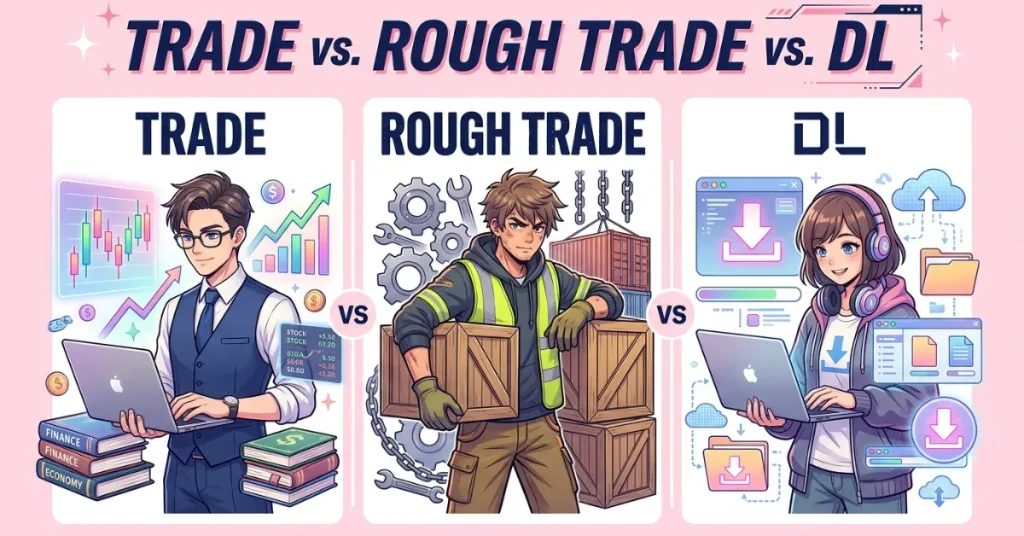
These terms are related in some discussions, but they are not interchangeable.
Trade can refer to a casual male partner or a masculine-presenting man seen as attractive in gay and queer slang. It can also mean an ordinary exchange.
Rough trade is a related historical expression with additional associations. Its meaning should be explained separately rather than reduced to a synonym for trade.
DL, or down low, refers in relevant slang contexts to keeping certain relationships or encounters private. It does not simply mean the same thing as trade.
Because these terms have different histories and uses, context is essential to understanding what a speaker intends.
Frequently Asked Questions About Trade Slang
What does trade mean in slang in 2026?
It can refer to a masculine-presenting man seen as attractive or a casual male partner in gay and queer slang. It can also mean an exchange in gaming, finance, or everyday conversation. There is no single meaning for every online use.
What does trade mean on TikTok?
On TikTok, it may refer to queer slang about masculinity or attraction, particularly in comments and memes. The meaning depends on the video and discussion.
What does “wanna trade” mean on Snapchat?
It asks whether someone wants to exchange something. In some conversations, that means pictures. If the request is unclear, ask what they mean rather than assuming.
What does trade mean in texting?
It can refer to attraction or a partner in queer slang, or to exchanging something. The words around it help identify the intended meaning.
Is calling someone trade a compliment?
It can be meant as a compliment, but not everyone likes being described that way. Consider the person’s comfort and the situation.

Daniel Parker is a writer and language enthusiast with a passion for modern slang, internet culture, and the way people communicate online.
As the creator and contributor at posmeaningslang.com, Daniel focuses on making slang words, phrases, abbreviations, and online expressions easier to understand. His goal is to provide clear definitions, useful examples, and simple explanations that help readers understand the language they encounter every day.
Daniel enjoys exploring how language evolves across social media, texting, gaming, and online communities. He believes that understanding modern slang isn’t just about knowing words—it’s about understanding the context and culture behind them.
Through posmeaningslang.com, Daniel aims to create a helpful and easy-to-use resource for anyone looking to understand today’s slang and internet language.
Areas of Interest: Slang • Internet Language • Social Media • Modern Communication • Language & Culture