Sopranos Slang Words: 50+ Italian-American Terms Explained
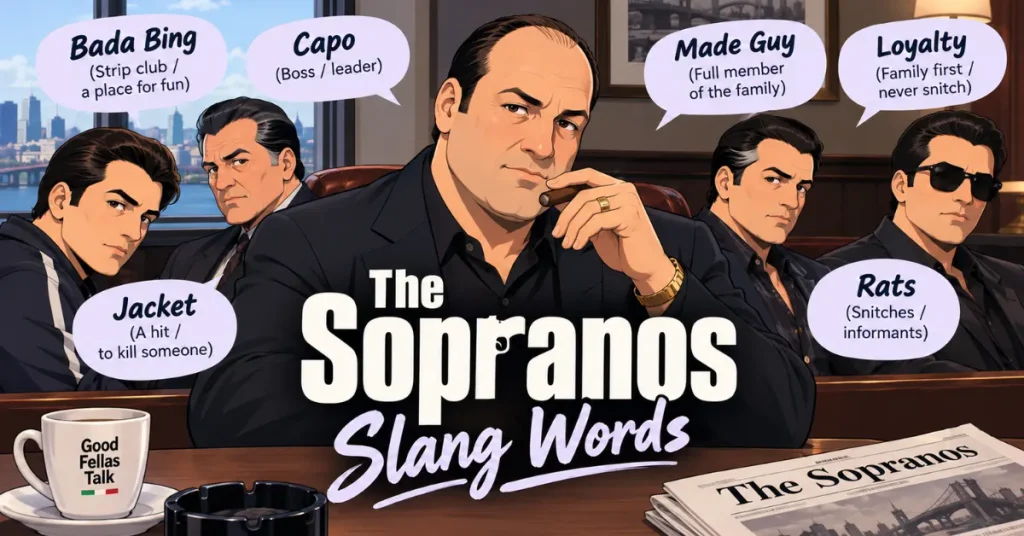
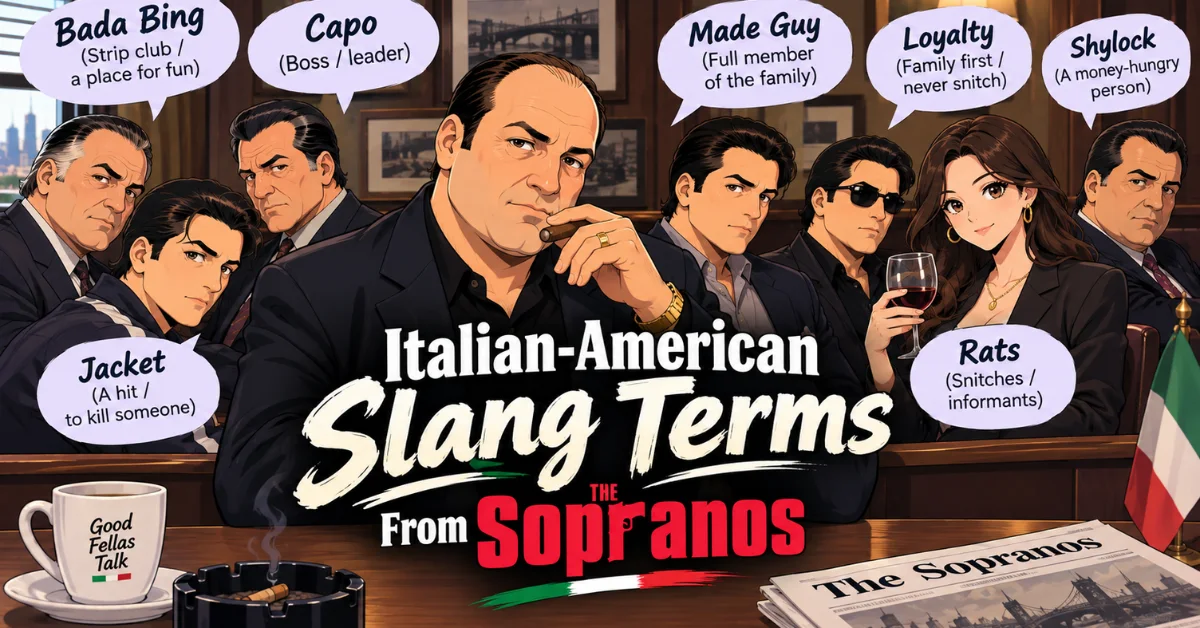
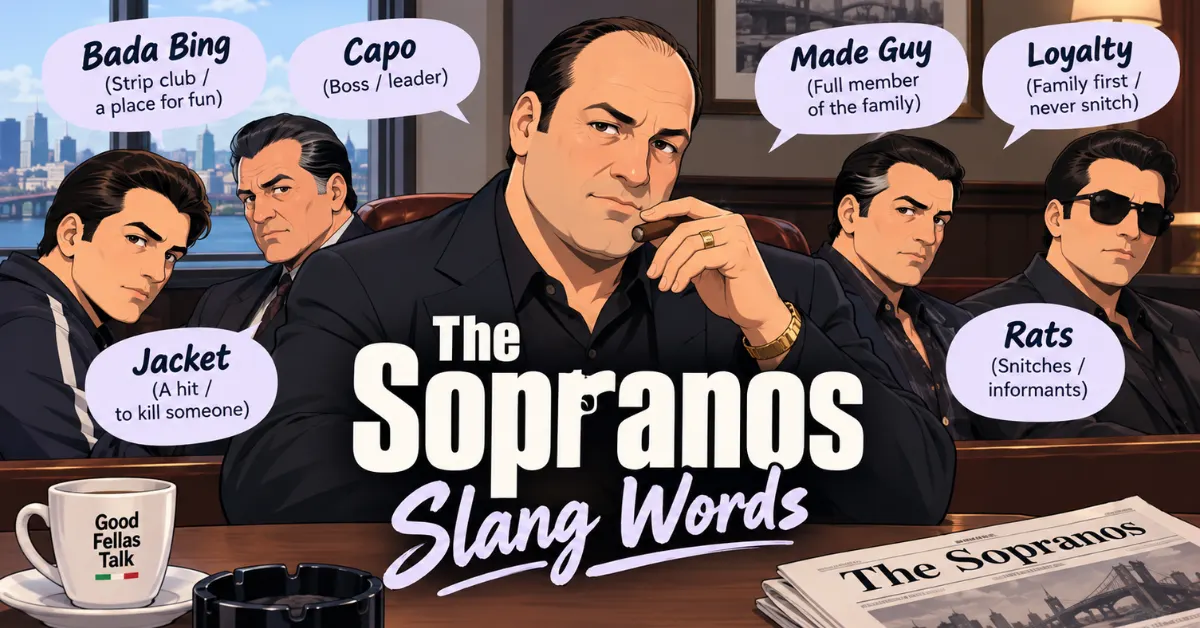
Sopranos slang words are the memorable Italian-American expressions, dialect forms, Mafia terms, and New Jersey-style phrases that make The Sopranos sound so unmistakably authentic. If you’ve ever heard Tony Soprano say “gabagool,” “madone,” “goomah,” or “stunad” and wondered what on earth he meant, you’re not alone. The show blends Italian-American slang, New Jersey dialect, Mafia vocabulary, Italian food terms, and Neapolitan-influenced pronunciation into dialogue that feels like a language of its own.
After studying the recurring terminology and comparing modern glossaries with linguistic explanations, the pattern becomes much clearer. Some Sopranos slang words are genuinely rooted in ItalianAmerican speech, while others are Mafia jargon or expressions that the series helped make famous. This guide separates those ideas so you can understand the meaning, pronunciation, context, cultural background, and everyday usage without confusing TV shorthand with standard Italian.
Sopranos Slang Words: Quick Table
| Sopranos slang word | Meaning | Category |
| Gabagool | Capicola/capocollo | Food |
| Goomah | Mistress | Relationship |
| Goombah | Friend or associate | Social |
| Stunad | Fool or idiot | Insult |
| Madone | Expression of surprise | Exclamation |
| Stugots | Vulgar Italian-American expression | Slang |
| Wiseguy | Mobster/organized-crime associate | Mafia |
| Made man | Initiated Mafia member | Mafia |
| Consigliere | Trusted adviser | Mafia |
| Omertà | Code of silence | Mafia |
| Bada bing | Emphatic expression | Phrase |
| Agita | Stress, anxiety or heartburn | Everyday slang |
| Cugine | Young or low-level associate | Mafia |
| Pasta fazool | Pasta e fagioli | Food |
| Oogatz | Nothing | Slang |
| Oobatz | Crazy | Insult |
The most recognizable examples combine language and character. HBO’s visual dictionary highlighted terms including gabagool, Madone, stugots, and goomah, demonstrating how central this vocabulary was to the show’s dialogue.
The important point is that not every expression is uniquely invented for The Sopranos. Some forms existed before the series, some come from Italian-American dialects, and some belong to organized-crime vocabulary. The show brought them together so effectively that viewers often associate the entire group with Tony Soprano and North Jersey.
How The Sopranos Taught Me Italian-American Slang
The magic of The Sopranos is that viewers rarely receive a neat dictionary definition before hearing an unfamiliar word. Instead, the meaning emerges from the scene. Someone says “stunad” after a foolish decision, “madone” after shocking news, or “gabagool” around the dinner table, and context does much of the teaching. That is one reason the Sopranos slang words remain memorable.
Modern fan discussions show the same effect. Viewers still compare the expressions they remember hearing for the first time, with gabagool, stugots, goomah, marone, stunad, oogatz, and other terms repeatedly appearing in conversations about the show’s vocabulary.
Why This Slang Even Exists
One of the biggest mistakes is calling everything on the show “Italian.” Much of the vocabulary reflects Italian-American speech, regional dialects, English influence, and Mafia terminology rather than textbook modern Italian. Sources discussing gabagool, for example, connect its pronunciation to Italian-American varieties influenced by Southern Italian dialects and immigrant speech patterns.
That explains why words can look strange on the page. Capocollo or capicola can become “gabagool,” mozzarella can become “moozadell,” and ricotta can become “rigott.” These aren’t simply random misspellings; they reflect pronunciation changes associated with particular Italian-American communities.
The Sopranos Slang Words People Actually Ask About
The terms below are the ones most likely to make a first-time viewer pause the episode and reach for Google. They also illustrate why the show’s vocabulary works so well: one word can carry information about food, family, identity, social status, humor, or criminal culture.
Gabagool
Gabagool is the famous Italian American pronunciation associated with capicola or capocollo, a cured pork cold cut. The form became especially recognizable through The Sopranos, where food is woven into everyday family and mob-life scenes. Linguistic sources connect the pronunciation to Italian American dialect patterns rather than treating it as standard Italian.
Stunad
Stunad or stunod is used for someone foolish, stupid, or generally acting like an idiot. Competitor research connects it with Italian American speech and the Italian word stonato, while modern explanations often emphasize its insulting but sometimes familiar tone. In The Sopranos, delivery matters as much as dictionary meaning.
Goomah and Goombah
These two are easy to confuse, but the meanings are very different. Goomah refers to a mistress or a Mafia man’s girlfriend, while goombah can refer to a friend, companion, or associate. The distinction appears repeatedly in Sopranos-related glossaries and is one of the most useful vocabulary contrasts for new viewers.
Bada Bing
Bada bing is an emphatic expression associated with the idea of something happening quickly or obviously, and it is also inseparable from the Bada Bing club in the series. The phrase existed before The Sopranos, but the show helped cement its connection with Italian American mobster pop culture.
Wiseguy
A wiseguy in the show’s Mafia context isn’t simply somebody who thinks he’s clever. It can refer to a person involved in organized crime or someone deeply connected to that world. That distinction matters because everyday American English can use “wiseguy” more loosely as an insult for a smart-mouth.
Agita
Agita describes stress, anxiety, irritation, or the uncomfortable feeling associated with heartburn or emotional pressure. It is particularly useful because it demonstrates that some of the show’s language isn’t exclusively Mafia slang. Instead, it reflects broader Italian-American vocabulary that can describe ordinary life.
Stugots
Stugots is a vulgar expression derived from Italian and is also the name of Tony Soprano’s boat. HBO’s visual dictionary specifically highlighted the term and explained its connection with male anatomy. Because of its vulgarity and cultural context, it is better understood as colorful adult slang than as a normal Italian word.
Where I See People Mess These Up
The first common mistake is assuming that every unusual word heard on The Sopranos is standard Italian. It isn’t. The dialogue combines Italian-American dialect, English, regional pronunciation, Mafia jargon, food vocabulary, and deliberately exaggerated expressions. Calling all of it “Italian” removes exactly the cultural context that makes the language interesting.
The second mistake is mixing up similar looking words. Goomah and goombah are the classic example. Another is treating gabagool as if it were the normal Italian name for the meat. Understanding the relationship between the dialect form and the standard food name gives you a much more accurate picture.
A Simple Way to Actually Learn These
If you’re learning Sopranos slang words because you’re watching the series, don’t memorize a giant vocabulary list first. Watch with subtitles, pause when a strange word appears, write down the scene, and then look up the term. Context will tell you whether a word is an insult, food term, Mafia title, exclamation, or everyday expression.
It also helps to compare the dialect form with its likely Italian or Italian-American equivalent. That approach makes patterns such as gabagool/capocollo, manigot/manicotti, and rigott/ricotta easier to recognize. A modern Italian-American pronunciation guide similarly emphasizes recurring sound changes rather than treating each word as an isolated oddity.
10 Italian-American Slang Words and Their Standard Italian Equivalents
This broader category helps explain the linguistic world surrounding The Sopranos. Listen & Learn USA identifies expressions such as goombah, gavone, statazit, mamaluke, facciabrutt’, aduzipazz, gidrul’, paesan’, maron’, and shkeeve, pairing them with Italian equivalents and example usage.
| Italian-American form | Related Italian form | General meaning |
| Goombah | Compare | Companion/friend |
| Gavone | Cafone | Someone rude or excessive |
| Statazit | Stai zitto | Be quiet |
| Mamaluke | Mammalucco | Fool |
| Facciabrutt’ | Brutta faccia | Ugly face |
| Aduzipazz | Ma tu sei pazzo | You’re crazy |
| Gidrul’ | Citrullo | Foolish person |
| Paesan’ | Paesano | Fellow countryman |
| Maron’ | Madonna | Surprise/frustration |
| Shkeeve | Schifo | Disgust/disgusting |
These forms demonstrate why Sopranos slang words should be treated as a cultural and linguistic category rather than a simple Mafia glossary. Some are insults, some are expressions, and others are everyday words shaped by regional speech.
10 Food-Related Italian-American Slang Terms
Food is one of the strongest recurring semantic clusters in The Sopranos. The show constantly places language around family meals, restaurants, delis, celebrations, and everyday conversation. That makes food vocabulary particularly memorable—and it explains why gabagool became the unofficial poster child for Sopranos speech.
| Italian-American form | Standard form | Meaning |
| Gabagool | Capocollo/capicola | Cured pork |
| Muzzarell’ | Mozzarella | Cheese |
| Manigott’ | Manicotti | Stuffed pasta |
| Fajool | Fagioli | Beans |
| Calamad | Calamari | Squid |
| Brosciutt’ | Prosciutto | Cured ham |
| Rigott’ | Ricotta | Soft cheese |
| Ganol’ | Cannoli | Filled pastry |
| Soopersahd | Soppressata | Cured sausage |
| Scungill’ | Scungilli | Conch |
The relationship between these pronunciations and Italian American dialect is more than a running joke. Linguistic explanations describe patterns such as altered consonants, compressed vowels, and dropped final syllables.
4 Italian-American Slang Terms From The Sopranos
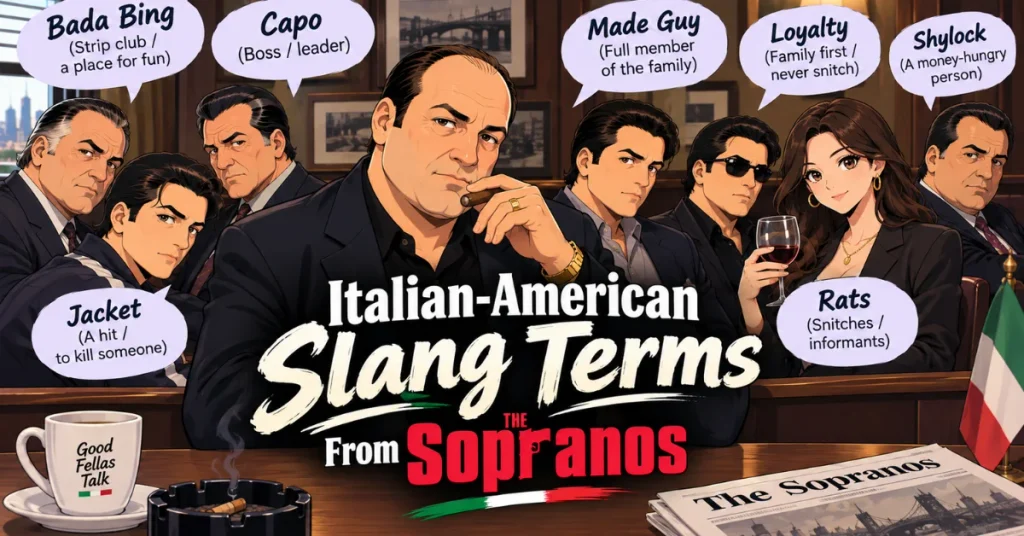
Listen & Learn specifically identifies four expressions associated with The Sopranos: whadayagunnado, fuggedaboudid, goomah, and pasta fazool. Each represents a slightly different part of the show’s language resignation, dismissal, relationship vocabulary, and food culture.
Whadayagunnado? expresses acceptance of an unfortunate situation: essentially, “What are you going to do?” Fuggedaboudid is a stylized “forget about it,” while goomah refers to a mistress. Pasta fazool is the Italian-American pronunciation of pasta e fagioli, a pasta-and-bean dish.
More Sopranos slang words worth knowing
| Term | Meaning |
| Oogatz | Nothing |
| Oobatz | Crazy |
| Marone/Madone | Expression of surprise or frustration |
| Googootz | Zucchini/term of endearment |
| Strunz | Jerk or fool |
| Consigliere | Trusted adviser |
| Capo | High-ranking Mafia position |
| Sfogliatelle | Italian pastry |
| Prujoot | Prosciutto |
| Mutz | Mozzarella |
| Manigot | Manicotti |
| Pishadoo | Vulgar term |
| Fangul | Vulgar dismissal |
| Paesan | Fellow Italian/person from the same community |
Several of these terms appear in modern Sopranos glossaries and fan discussions, although spelling and pronunciation can vary considerably between sources and speakers.
FAQ’s
What are the Italian slang words used in The Sopranos?
Common examples include gabagool (capicola), goombah (associate/friend), madone (an exclamation), stugots (nonsense/“my penis,” depending on context), and mook (an unpleasant or foolish person).
What is Tony Soprano’s most famous line?
One of Tony Soprano’s most famous lines is “What are you gonna do?” However, the show has many memorable Tony quotes, including “I’m the motherfucking fucking one who calls the shots.”
What are some funny words used by The Sopranos?
Some of the most memorable and humorous terms include gabagool, stugots, madone, ugatz, fugazi, goombah, and malocchio. Many are Italian-American expressions rather than standard Italian.
What does “ugatz” mean in The Sopranos?
Ugatz” is Italian-American slang derived from un cazzo, literally referring to “a dick,” but in the show it is commonly used to mean “nothing,” “not a damn thing,” or “zero.”

Daniel Parker is a writer and language enthusiast with a passion for modern slang, internet culture, and the way people communicate online.
As the creator and contributor at posmeaningslang.com, Daniel focuses on making slang words, phrases, abbreviations, and online expressions easier to understand. His goal is to provide clear definitions, useful examples, and simple explanations that help readers understand the language they encounter every day.
Daniel enjoys exploring how language evolves across social media, texting, gaming, and online communities. He believes that understanding modern slang isn’t just about knowing words—it’s about understanding the context and culture behind them.
Through posmeaningslang.com, Daniel aims to create a helpful and easy-to-use resource for anyone looking to understand today’s slang and internet language.
Areas of Interest: Slang • Internet Language • Social Media • Modern Communication • Language & Culture