
Friend Slang: 50+ Cool, Funny & Modern Terms for Friends
If you need friend slang, the most natural choices include bestie, buddy, bro, homie, fam, pal, and ride or die but each carries a different tone. After years of studying everyday English and informal language, I’ve learned that choosing the right word is less about memorizing a list and more about understanding the relationship behind it.
Whether you’re texting a close friend, writing an Instagram caption, talking in a group chat, or trying to understand Gen Z language, this guide breaks down modern friend slang, classic American expressions, regional terms, and playful nicknames so you can sound natural instead of forced. Current 2026 usage also shows that friendship vocabulary continues shifting with social media and online communities.
Friend Slang: What Is Slang for Friends, and Why Does It Change So Fast?
Friend slang means informal words or expressions used instead of simply saying “friend.” Terms such as buddy, bestie, homie, bro, fam, and squad can communicate closeness, humor, loyalty, or belonging. The exact feeling depends on the speaker, relationship, generation, and situation.
The vocabulary changes because language follows culture. Music, gaming, memes, social media, texting, and group chats constantly introduce expressions that can spread quickly. A word may begin inside one community and eventually become mainstream, while another term can feel dated within a few years.
Friend Slang: Classic Slang for Friends That Never Really Left

Some friend slang survives because it is simple and emotionally clear. Buddy, pal, mate, chum, amigo, and best bud have different regional or generational flavors, but they all express companionship without sounding overly formal. In American English, “buddy” remains especially natural and widely understood.
Classic terms are useful when you want something familiar rather than aggressively trendy. “Hey, buddy” feels warm, while “pal” can sound slightly old-fashioned. “Mate” is strongly associated with British and Australian English, whereas “amigo” adds a playful Spanish-influenced touch to casual American conversation.
Quick Friend Slang Reference
| Friend slang | Meaning or feeling | Typical use |
| Buddy | Friendly companion | Everyday American English |
| Pal | Casual friend | Friendly, sometimes old-fashioned |
| Bestie | Very close friend | Texting and social media |
| Homie | Close or trusted friend | Casual conversation |
| Bro | Close friend | Very informal |
| Fam | Friend who feels like family | Casual/social |
| Mate | Friend or companion | British/Australian English |
| Amigo | Friend/buddy | Playful casual speech |
| Sidekick | Loyal companion | Humor and captions |
| BFF | Best Friends Forever | Social media and texting |
| Ride or die | Extremely loyal friend | Emotional or expressive contexts |
| Day one | Longtime friend | Sentimental contexts |
These meanings are broadly consistent with the terminology covered across the current competitor set, although individual communities can use the same term differently.
Friend Slang: Modern Friend Slang Gen Z and Millennials Actually Use
Modern friend slang often emphasizes personality rather than simply identifying someone as a friend. Words like bestie, twin, day one, comfort person, main character, and ride or die can communicate affection, similarity, loyalty, or emotional closeness. They are especially visible in social media captions and messages.
The interesting part is that newer usage isn’t always limited to literal definitions. “Bestie,” for example, can mean a genuine best friend, but online speakers may also use it as a warm or playful way to address someone. Context therefore matters as much as the dictionary meaning.
Slang for Friends Who Show Loyalty
When loyalty is the main message, ride or die, day one, OG, homie, fam, and ace communicate a stronger bond than ordinary “friend.” These expressions suggest someone who has stayed around through difficult moments, shared history, or major life changes. Tone remains important.
“Day one” is particularly useful for someone who has known you from the beginning, while “ride or die” emphasizes unwavering support. “OG” can recognize someone who has been around for years. These terms work naturally in captions, conversations, and heartfelt messages between genuinely close friends.
Slang for Friends With a Playful Vibe
For humor, friendship slang can become much more imaginative. Twin, unhinged duo, partner in chaos, trouble, chaos goblin, and bestie for the restie create a playful picture rather than simply labeling someone a friend. These expressions work especially well when the relationship has inside jokes.
Imagine your friend convincing you to take a spontaneous midnight road trip. “My partner in chaos” says far more than “my friend.” Likewise, calling someone your “twin” can highlight similar personalities, habits, outfits, or opinions. The best playful slang feels spontaneous rather than copied from a list.
Friend Slang: British Slang Words for Mates and Besties
American friend slang overlaps heavily with British vocabulary, but regional expressions can sound completely different. Mate is the classic British option, while bruv, blud, bezzie, chief, and boss can appear depending on region, age, social circle, and context. American readers usually understand these through the media.
One important point is cultural context. Some British expressions have roots in particular communities, including Black British culture and grime music. Using a term naturally means understanding its social background rather than treating every expression as a generic internet nickname.
Friend Slang: Slang for Your Friend Group and Squad
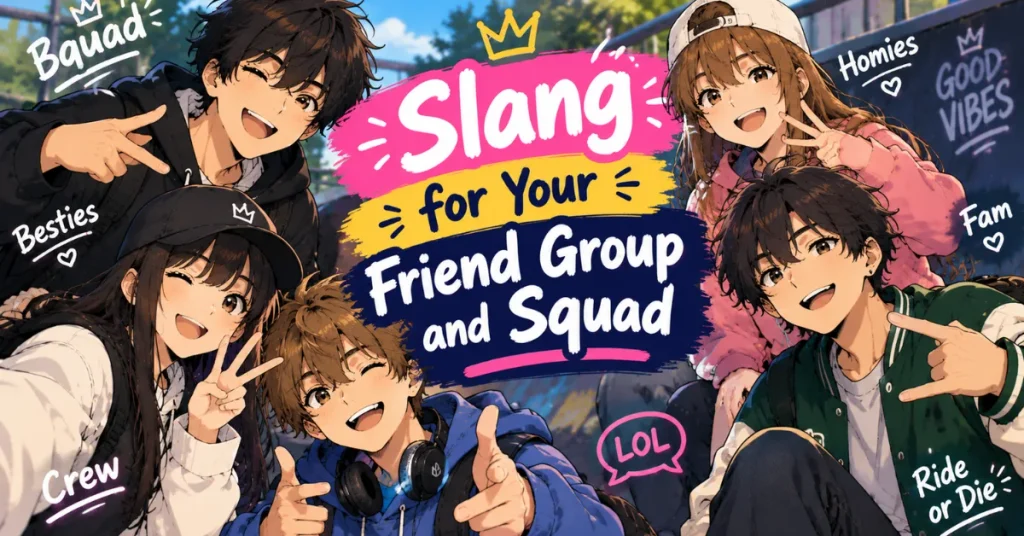
Not all friend slang describes one person. Some terms describe the entire social circle. Squad, crew, gang, framily, my people, and the team can refer to groups that regularly spend time together. “Squad” became especially recognizable through social media, while “crew” remains broadly flexible.
There are subtle differences between them. “My people” can feel warm and personal, “crew” can describe almost any shared activity, and “framily” combines friendship and family. These expressions are useful in captions, group chats, travel posts, and everyday conversations about the people closest to you.
Friend Slang: Friend Slang for Every Type of Relationship
The best friend slang depends on the relationship you are describing. A childhood friend may be your day one or OG, a close female friend might be your bestie or sis, and a trusted male friend may be your bro or homie. None of these categories is completely fixed.
That flexibility is important in modern English. Gender boundaries have loosened considerably, so words once strongly associated with men or women can now be used more broadly. Still, tone and personal preference matter. The safest approach is to notice how people in your own social circle actually speak.
Guy Friends and Girl Friends
Traditional friend slang sometimes separates terms by gender, but current usage is much more flexible. Bro, homie, dawg, and G may describe male friends, while sis, bestie, and twin can describe female friends. However, younger speakers often use these terms across gender lines.
A guy can call another guy “bestie,” just as a woman might casually call her friend “bro.” The relationship and conversational style usually matter more than strict gender rules. If you’re unsure, follow the language your friends already use rather than forcing a label that doesn’t fit.
Work Friends and Childhood Friends
Work friendships and childhood friendships often have different kinds of friend slang because the relationships develop differently. “Work wife” or “work husband” can describe a close, platonic colleague, while day one and OG emphasize a friendship built through years of shared history.
Context is especially important here. A nickname that sounds hilarious in a private group chat could feel inappropriate at work. Likewise, calling a new colleague your “ride or die” might sound exaggerated. Slang works best when the emotional intensity matches the actual relationship.
Friend Slang: Texting and DM Slang Between Friends
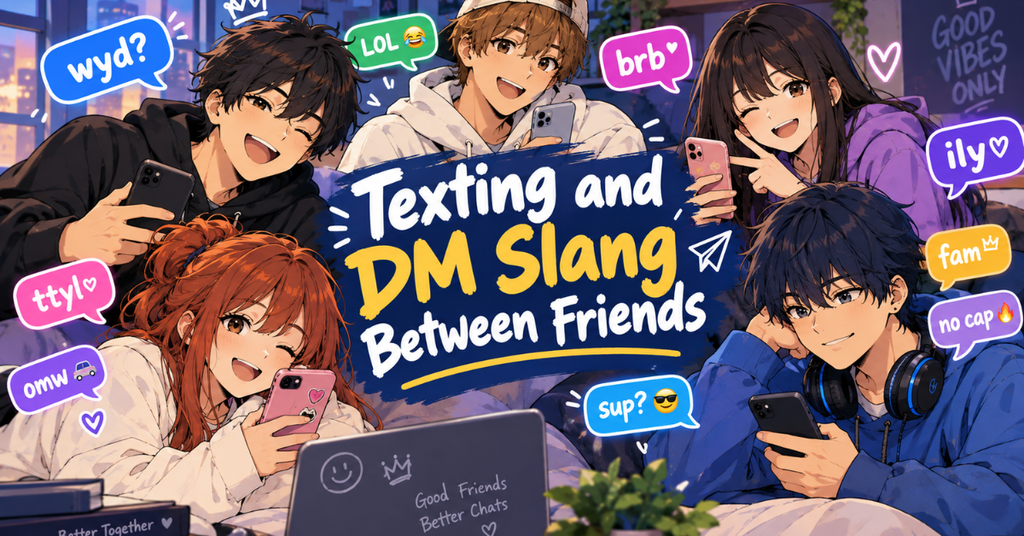
Texting has changed friend slang by making short, expressive terms incredibly convenient. Bestie, bro, fam, FRFR, IYKYK, and other internet expressions can function as greetings, reactions, inside jokes, or signals of closeness. Group chats are especially fertile environments for new language and personalized expressions.
Online slang also depends heavily on context. The same word can feel affectionate in one message and sarcastic in another. Emojis, punctuation, capitalization, and the existing relationship all influence interpretation. That is why understanding friend slang requires more than memorizing definitions from a dictionary.
Friend Slang: How to Use Friend Slang Naturally
The easiest way to use friend slang naturally is to match the word with the relationship. Use buddy or pal for a broadly friendly tone, bestie for affectionate closeness, homie or bro for casual familiarity, and ride or die when you genuinely mean deep loyalty. Don’t force a trendy word.
Slang also belongs in the right setting. Texts, captions, casual conversations, jokes, and dialogue are natural places for it. Professional emails, formal essays, interviews, and serious workplace communication usually call for standard language. The strongest slang sounds like something you would actually say not something copied from an SEO list.
FAQs About Friend Slang
What is Gen Z slang for friends?
Bestie, besties, bro, homie, fam, squad.
What can I say instead of friends?
Mates, buddies, pals, homies, besties.
What is the UK slang for friend?
Mate is the most common UK slang for a friend.
What are 10 slang words?
Bestie, bro, homie, fam, mate, buddy, pal, dawg, bruh, squad.

Daniel Parker is a writer and language enthusiast with a passion for modern slang, internet culture, and the way people communicate online.
As the creator and contributor at posmeaningslang.com, Daniel focuses on making slang words, phrases, abbreviations, and online expressions easier to understand. His goal is to provide clear definitions, useful examples, and simple explanations that help readers understand the language they encounter every day.
Daniel enjoys exploring how language evolves across social media, texting, gaming, and online communities. He believes that understanding modern slang isn’t just about knowing words—it’s about understanding the context and culture behind them.
Through posmeaningslang.com, Daniel aims to create a helpful and easy-to-use resource for anyone looking to understand today’s slang and internet language.
Areas of Interest: Slang • Internet Language • Social Media • Modern Communication • Language & Culture