

Paisa Meaning Spanish Slang: What It Really Means

Paisa meaning Spanish slang usually refers to a person connected to a particular place or culture, especially someone from Colombia’s Paisa region around Antioquia and Medellín. In other Latin American contexts, paisa can mean a fellow countryman or close companion, so the exact meaning depends on region and context. ASALE traces the word to paisano and documents several regional uses.
If you searched this phrase because you saw paisa in a text, TikTok caption, song, or conversation, the confusion is understandable. The word can signal Colombian identity, friendship, familiarity, or shared roots. It is also easy to confuse with the South Asian monetary word paisa, which is a completely different meaning and origin.
What Does Paisa Mean in Spanish Slang?
In Spanish slang, paisa is generally a shortened form of paisano, meaning someone from the same place or country. In Colombia, however, it has a much more specific cultural meaning: a person from the Paisa region, particularly Antioquia and Medellín. The term can express regional identity, familiarity, or pride.
So if someone says “Soy paisa”, they may be telling you they are from the Paisa region rather than simply calling themselves “Spanish slang.” In other settings, paisa can be used more broadly for a fellow countryman or familiar companion. Context, country, and relationship all matter.
Paisa Meaning in Colombia
In Colombia, paisa has one of its clearest meanings. It commonly identifies people associated with Antioquia and the broader Paisa cultural region, including areas connected with Medellín and parts of the Colombian coffee region. For many speakers, the word carries a strong sense of hometown identity and cultural belonging.
You might hear “Soy paisa” from someone proudly describing their Colombian roots. The word can also appear alongside references to the Paisa accent, food, traditions, and local culture. It is therefore more than a random nickname; in Colombia, it can function as a meaningful regional identity label.
Paisa Meaning in Mexico
The paisa meaning Spanish slang can shift in Mexico. ASALE records paisa as a term for someone from the same place in several Latin American countries, and other sources document Mexican usage connected with fellow countrymen or familiar community members.
That means a Mexican speaker may use paisa differently from someone in Medellín. In some communities, it can suggest shared hometown or national roots and familiarity. Rather than assuming one fixed translation, listen to how the people around you use the word and consider the speaker’s regional background.
Paisa Meaning in the United States Spanish Slang

In U.S. Spanish, paisa can appear in Latino and immigrant communities where language carries ideas of home, shared roots, and cultural familiarity. Its meaning may refer to a fellow countryman or Latino from a related community, although the exact sense depends heavily on who is speaking and where they come from.
This is why translating paisa as simply “Mexican” or “Colombian” can sometimes miss the point. In bilingual conversations, the word may communicate belonging as much as nationality. Tone also matters: a friendly “qué hubo, paisa” can feel very different from a sarcastic comment built around stereotypes.
Is Paisa Positive or Negative?
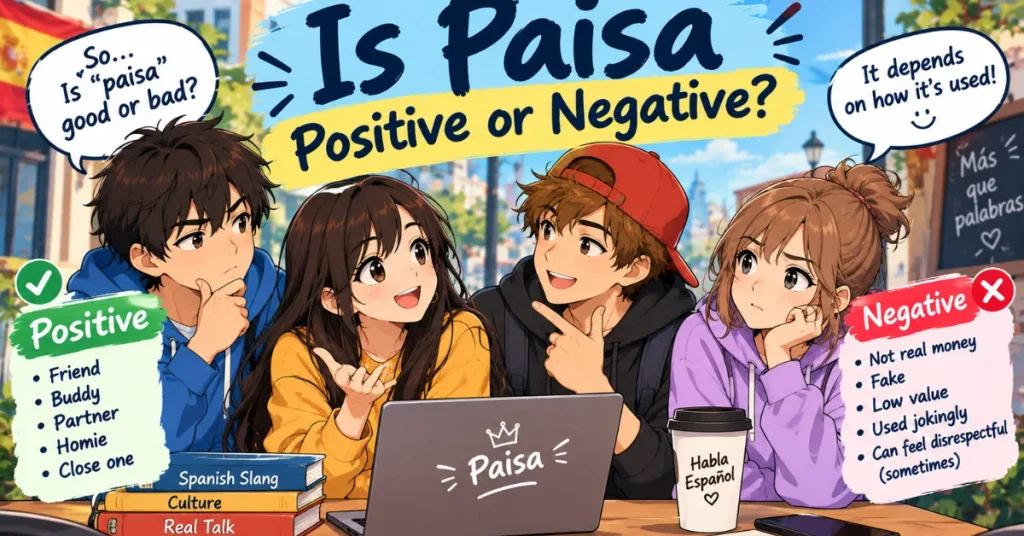
Paisa is not automatically a positive or negative word. In Colombia, it can be a proud regional identity. In other contexts, it may simply describe someone from the same place or community. However, tone can turn an otherwise neutral label into teasing or stereotyping, particularly when someone uses it to make assumptions about another person’s background.
A useful rule is simple: if someone calls themselves paisa, there is usually little reason to treat the word as offensive. If you’re using it for someone else, understand their cultural context first. Respectful use is especially important when you do not know the person well.
Examples of Paisa in Different Tones
A friendly example is “¿Qué hubo, paisa?”, where the word can function as a familiar way of addressing someone. A neutral example is “Él es paisa de Antioquia,” identifying the person’s regional background. These examples show why the same word can communicate friendship, identity, or simple geographic information.
Tone becomes more complicated when paisa is used to stereotype someone as rural, unsophisticated, or overly traditional. Those implications are not inherent in the word itself. They come from the speaker’s intention and surrounding context. The safest approach is to understand the community before copying slang from social media.
Paisa vs Paisano
Paisa and paisano are closely related because paisa is an apocopated or shortened form of paisano. ASALE explicitly identifies this relationship. Depending on the country, paisano can mean a fellow countryman or person from the same place, while paisa often feels shorter, more colloquial, and more regionally marked.
For learners, the easiest distinction is that paisano is the fuller traditional word, while paisa is the shorter form whose meaning has developed differently across regions. In Colombia, paisa has a particularly strong connection to Antioquia and its surrounding cultural identity.
Pronunciation of Paisa
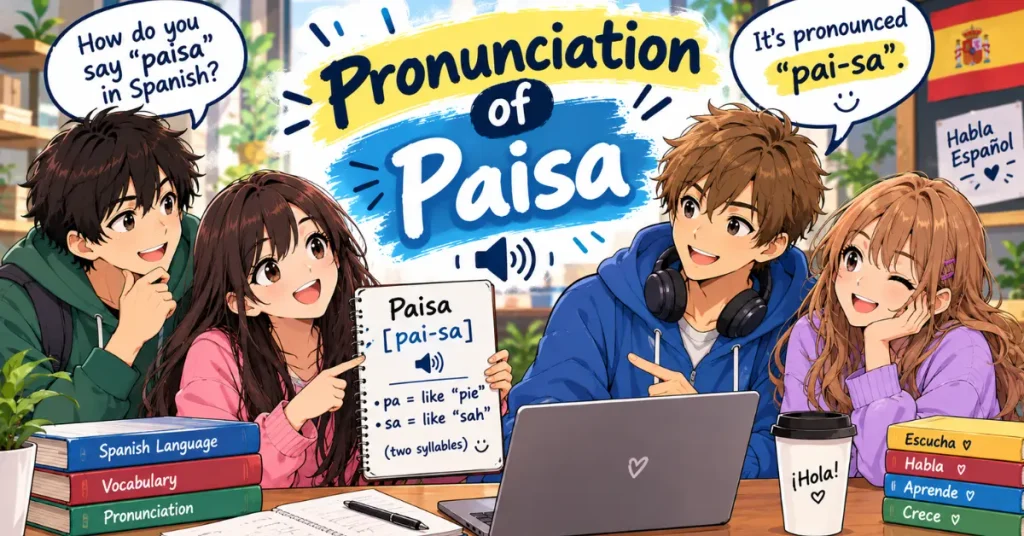
The Spanish word paisa is generally pronounced approximately “PIE-sa”, with two syllables. SpanishDictionary gives the pronunciation as “pay sah,” while Wiktionary records the Spanish pronunciation as /ˈpaisa/. The exact accent may vary slightly among speakers, but the word is straightforward once you hear it naturally.
For example, in “Ella es paisa,” the word sounds like PIE-sa. If you’re learning Colombian Spanish, listening to native speakers is more useful than forcing an English pronunciation. Regional rhythm and intonation can make the word sound slightly different in everyday conversation.
How Context Changes Meaning
The most important lesson about paisa meaning Spanish slang is that context controls interpretation. Country, region, relationship, tone, and conversation topic can all influence what the speaker intends. ASALE’s dictionary demonstrates this clearly by recording different meanings for different Spanish speaking countries.
If the conversation is about Medellín, Antioquia, Colombian food, or regional culture, paisa probably points toward Colombian identity. If you’re hearing it in another Latin American or U.S. Latino setting, the intended meaning may instead involve being from the same place or sharing cultural roots.
Common Misunderstandings About Paisa
One common mistake is assuming paisa always means money because the word also exists as a monetary term in South Asian languages. Merriam Webster identifies paisa as a monetary subunit associated with the rupee and taka, while Spanish linguistic sources give paisa a separate history connected with paisano. These are different words with different origins.
Another mistake is treating paisa as universal Spanish slang. It isn’t. Spanish changes dramatically across countries and regions, and paisa is a good example of that variation. When you see it online, check the speaker’s country and the surrounding conversation before deciding what the word means.
Quick Reference
| Context | Likely meaning of “paisa” |
| Antioquia, Colombia | Person from the Paisa region |
| Medellín | Regional Colombian identity |
| Some Latin American contexts | Person from the same place |
| Some contexts in Mexico | Fellow countryman or familiar community member |
| U.S. Latino communities | Meaning can depend on country and community |
| South Asian languages | Monetary unit different word origin |
The linguistic evidence supports treating context as essential, rather than assigning one universal definition.
FAQ Section
What does “paisa” mean in Spanish slang?
Paisa is generally a shortened form of paisano. Depending on the region, it can refer to someone from the same place or country, while in Colombia it specifically refers to someone associated with the Paisa region, especially Antioquia.
Is paisa a friendly term?
It can be. In Colombia, paisa is often used proudly as a regional identity. In other contexts, it can express familiarity or shared roots. The tone and relationship between speakers determine whether it sounds friendly, neutral, teasing, or potentially disrespectful.
Do Spanish speakers outside Colombia use paisa?
Yes. ASALE documents paisa across multiple Latin American countries with different regional meanings. It can refer to someone from the same place, a close companion, or a Colombian depending on the country.
Can paisa mean friend?
Sometimes it can carry a sense of familiarity or companionship, but paisa does not universally mean “friend.” ASALE records a close-friend meaning in certain countries, showing why regional context matters.
Is paisa used online?
Yes. Current slang resources document paisa in social media, messaging, memes, and online conversations, particularly when people discuss Colombian culture and regional identity. However, online usage can vary significantly by community.
Does paisa mean money in Spanish?
Not as its primary Spanish slang meaning. Paisa is also a monetary word in South Asian languages such as Hindi and Urdu, which creates confusion. In Colombian Spanish, everyday money slang is more commonly associated with words such as plata.

Daniel Parker is a writer and language enthusiast with a passion for modern slang, internet culture, and the way people communicate online.
As the creator and contributor at posmeaningslang.com, Daniel focuses on making slang words, phrases, abbreviations, and online expressions easier to understand. His goal is to provide clear definitions, useful examples, and simple explanations that help readers understand the language they encounter every day.
Daniel enjoys exploring how language evolves across social media, texting, gaming, and online communities. He believes that understanding modern slang isn’t just about knowing words—it’s about understanding the context and culture behind them.
Through posmeaningslang.com, Daniel aims to create a helpful and easy-to-use resource for anyone looking to understand today’s slang and internet language.
Areas of Interest: Slang • Internet Language • Social Media • Modern Communication • Language & Culture