What Does IGH Mean in Text? Meaning, Tone & Examples
If you have seen “IGH” in a text message, Snapchat conversation, or social media comment, you might wonder what it means. In casual online conversations, IGH usually means “ight,” a shortened slang form of “alright.” People use it to express agreement, acknowledge a message, or show that they understand what someone is saying.
For example, if a friend texts, “Meet me at 6,” you might reply, “IGH,” meaning “Alright” or “Okay.”
However, the meaning can depend on the conversation, the person using it, and the platform where it appears. Some people may use “IGH” as a personal abbreviation or typo, so context is important.
This guide explains what IGH means in text, how people use it on Snapchat, TikTok, and Instagram, how its tone can change, and how you can respond naturally.
What Does IGH Mean in Text?
In texting, IGH is often used as an informal variation of “ight,” which means “alright” or “okay.” It is a quick way to acknowledge a message without typing a complete response.
People commonly use short expressions in digital conversations because they are fast, simple, and casual. IGH fits this style, although it is less standardized than familiar abbreviations such as “OK” and “LOL.”
Here are a few examples:
- Friend: “I’ll call you later.”
- You: “IGH.”
- Meaning: “Alright, talk to you later.”
Another example:
- Friend: “Don’t forget to bring your notebook.”
- You: “IGH, I got you.”
- Meaning: “Okay, I understand.”
The expression does not automatically mean that someone is angry, upset, or uninterested. A short reply may simply reflect the person’s texting style.
It is also worth remembering that IGH is not universally understood. Some people may recognize it immediately, while others may interpret it as a typo or an abbreviation with a different meaning. If the conversation is unclear, asking what the person means is perfectly reasonable.
Examples of IGH in Real Conversations
The easiest way to understand IGH is to see how it works in everyday messages. Its meaning generally becomes clearer when you consider the message that comes before it.
Example 1: Agreeing With a Plan
Person A: “Wanna grab something to eat after school?”
Person B: “IGH, sounds good.”
Here, IGH means “alright” or “okay.” The additional phrase “sounds good” makes the agreement clear.
Example 2: Acknowledging Information
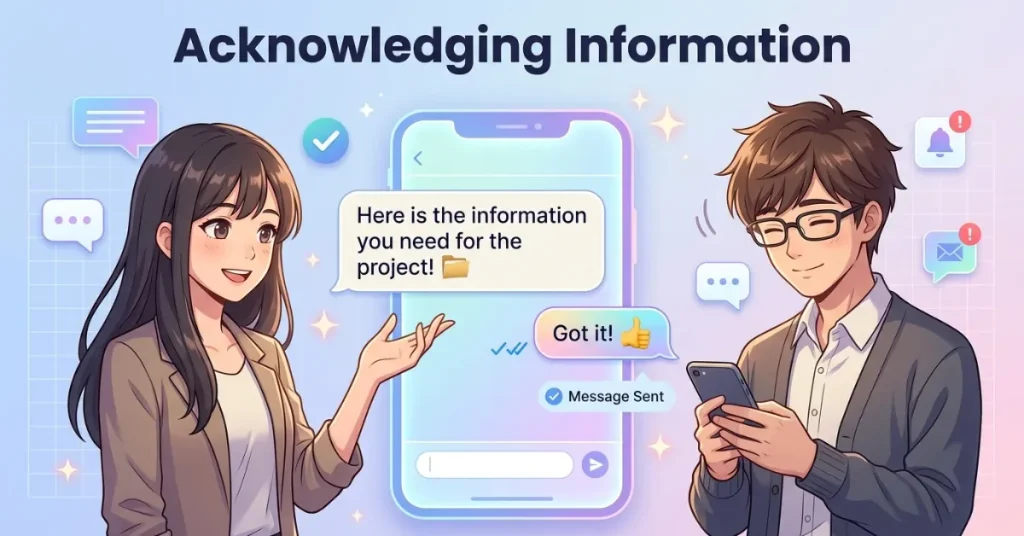
Person A: “The meeting starts at 4 PM.”
Person B: “IGH, thanks for telling me.”
In this conversation, IGH acknowledges the information. The person is letting the sender know they have understood the message.
Example 3: Ending a Conversation
Person A: “I need to finish my homework. Talk later.”
Person B: “IGH, see you.”
The expression works as a casual acknowledgment before the conversation ends.
Example 4: Responding to a Request
Person A: “Can you send me the notes tonight?”
Person B: “IGH, I’ll send them.”
Here, the response indicates agreement and adds a clear promise to send the notes.
Example 5: A Short or Unclear Reply
Person A: “Are you still coming?”
Person B: “IGH.”
This reply is less clear because it does not provide much information. Depending on the conversation, the sender may intend to say “alright,” but the recipient might not know whether the person is confirming the plan or simply acknowledging the question.
A clearer response would be “Yeah, I’m coming” or “Alright, see you there.”
These examples show why context matters. IGH can work as a quick acknowledgment, but a longer response is sometimes better when a question requires a specific answer.
IGH on TikTok, Snapchat, and Instagram
People often search for slang meanings because they encounter unfamiliar expressions on social media. IGH can appear in private messages, comments, captions, and conversations, but its meaning should not be assumed to be identical in every situation.
IGH on Snapchat
Snapchat conversations are often informal, so users may choose short replies rather than complete sentences.
For example:
Friend: “I’ll send you the picture later.”
You: “IGH.”
In this context, the response can mean “Okay” or “Alright.”
A short Snapchat message does not necessarily reveal someone’s feelings. People may reply briefly because they are busy, distracted, or simply accustomed to using abbreviations.
If someone sends IGH after a serious question, however, the response may feel incomplete. Look at the earlier messages before deciding what the person intended.
IGH on TikTok
TikTok slang spreads through videos, comments, trends, and interactions between users. An abbreviation that appears in a comment may be used differently from one found in a private message.
For instance:
Creator: “New video coming tomorrow!”
Comment: “IGH, waiting for it.”
The comment uses IGH as a casual acknowledgment, although the exact spelling is not as common or standardized as “OK” or “ight.”
If you encounter IGH in a TikTok video, check the caption, spoken words, and surrounding comments. The creator might be using it as ordinary texting slang, but a niche community could use the letters differently.
IGH on Instagram

On Instagram, short slang expressions can appear in direct messages, Stories, Reels comments, and group chats.
For example:
Person A: “I’ll tag you in the post.”
Person B: “IGH, thanks!”
The reply communicates understanding and acknowledgment.
Instagram users have different communication styles. Some prefer complete sentences, while others rely on shortened words and abbreviations. The meaning of IGH is best understood through the conversation rather than the platform alone.
The Tone of IGH: Friendly, Neutral, or Dismissive?
Although IGH is often used to mean “alright,” its tone can vary. The letters themselves do not tell you exactly how the sender feels.
When IGH Sounds Friendly
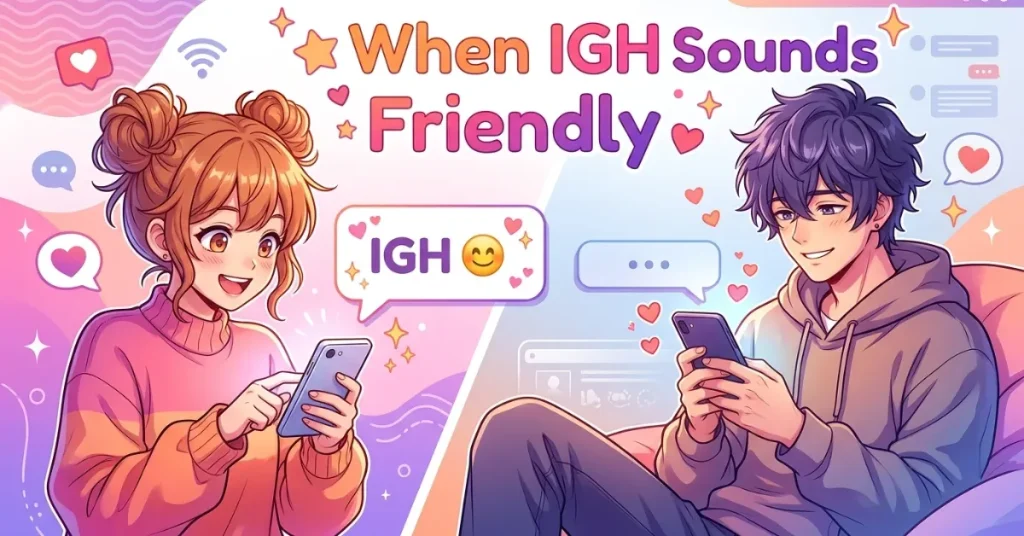
IGH can sound friendly when it appears alongside positive words, emojis, or an enthusiastic response.
Example:
“IGH 😄 see you there!”
The emoji and the rest of the message make the response feel warm and positive.
When IGH Sounds Neutral
A simple IGH can be a straightforward acknowledgment.
Example:
“IGH, I’ll be there at 5.”
The message confirms the plan without expressing much additional emotion. This is common in quick conversations.
When IGH Might Sound Dismissive
Sometimes, a very short reply can feel dismissive, particularly when someone expects a detailed answer or an emotional response.
Example:
Person A: “I wanted to explain why I was late yesterday.”
Person B: “IGH.”
The response may feel abrupt because the topic needs more attention. Still, it does not prove that the sender is annoyed or deliberately ignoring the other person.
They might be busy, unsure what to say, or using a naturally brief texting style. Avoid assuming the worst based on one abbreviation.
How Context Changes the Meaning
Consider these three messages:
- “IGH 😊” may feel friendly.
- “IGH, okay.” may sound neutral.
- “IGH.” may feel brief, depending on the conversation.
These are possible interpretations, not fixed rules. Punctuation, emojis, previous messages, and the relationship between the people involved can all affect how a reply is understood.
How to Reply to IGH
Your response depends on what the other person is discussing. You do not need to use slang just because someone else does.
If You Want to Agree
If the conversation is about a plan or suggestion, you can respond naturally with:
- “Okay!”
- “Sounds good.”
- “Bet.”
- “Alright, see you then.”
- “Cool, thanks.”
These replies make your agreement clear.
If You Want to Continue the Conversation
If you want to keep talking, add a question or another relevant detail.
Example:
Friend: “IGH.”
You: “Cool, what time works best for you?”
This moves the conversation forward instead of ending it with another short acknowledgment.
If You Are Unsure What the Person Means
Not everyone uses the same slang. If IGH appears in an unfamiliar context, ask a simple follow-up.
You could say:
- “What do you mean by IGH?”
- “Do you mean alright?”
- “Just checking, are we still meeting?”
These responses are useful when the message affects a plan or requires a clear answer.
If the Message Seems Cold
Avoid assuming that the sender is angry just because they used a short reply. If the topic is important, you can ask a calm question such as, “Is everything okay?” or “Did you mean that we’re good?”
Clear communication is more reliable than trying to determine someone’s feelings from three letters.
Common Mistakes With IGH
Short abbreviations can be confusing, especially when different users spell the same expression differently. Keep these common mistakes in mind.
Assuming Everyone Knows the Meaning
IGH is not a universally recognized abbreviation. A person unfamiliar with internet slang may not understand it. In professional messages, school-related communication, or important conversations, writing “alright” or “okay” is usually clearer.
Confusing IGH With Ight
“Ight” is a recognized informal spelling of “alright” in online conversation. IGH may be used as a variation or a shortened spelling, but usage differs between people and communities.
Because IGH is less standardized, do not assume every person intends the same meaning.
Thinking It Always Means Someone Is Upset
A short reply is not reliable proof of a person’s mood. Some people use abbreviations in nearly every conversation, even when they are happy or interested.
Look at the overall exchange before interpreting the tone.
Using It in Formal Communication
IGH is best suited to casual messages where the other person understands your style. For emails to teachers, job applications, workplace messages, or formal requests, use complete words.
For example, write “Okay, I understand” instead of “IGH.”
Ignoring the Conversation Around It
A slang expression can have different meanings in different communities. If IGH appears in a gaming chat, a specialized online group, or a conversation about a topic unrelated to agreement, check the context before assigning a definition.
IGH vs. Related Abbreviations
IGH is part of a broader collection of short expressions used in digital communication. Some have similar meanings, while others serve different purposes.
| Slang | Common meaning | Example |
| IGH | Often used as a variation of “ight,” meaning “alright” | “IGH, see you later.” |
| Ight | Informal form of “alright” | “Ight, let’s go.” |
| Aight | Informal spelling of “alright” | “Aight, no problem.” |
| OK | Agreement or acknowledgment | “OK, thanks.” |
| Bet | Agreement, acceptance, or confirmation | “Bet, I’ll be there.” |
| K | Short form of “okay”; tone can vary | “K, got it.” |
| BRB | Be right back | “BRB, answering the door.” |
| IDK | I don’t know | “IDK what time it starts.” |
| LOL | Laughing out loud; also used to signal amusement | “LOL, that’s funny.” |
These expressions are not completely interchangeable. “BRB” tells someone you will return shortly, while “IDK” communicates uncertainty. “Bet” can indicate agreement, but it can also express confidence depending on the conversation.
The main similarity between IGH, ight, and aight is their association with the informal word “alright.” Even then, spelling preferences vary by individual and online community.
Frequently Asked Questions About IGH
What does IGH mean in a text message?
IGH is often used as an informal variation of “ight,” meaning “alright” or “okay.” It usually acknowledges a message or signals agreement, although its meaning can depend on the conversation.
What does IGH mean on Snapchat?
On Snapchat, IGH may mean “alright” or “okay” in a casual chat. The surrounding messages can help you determine whether the sender is agreeing with a plan, acknowledging information, or simply giving a brief response.
What does IGH mean on TikTok?
On TikTok, IGH may be used as casual texting slang with a meaning similar to “alright.” However, slang varies across online communities, so the caption or comment thread can provide useful context.
Is IGH the same as Ight?
Not exactly in spelling, but the expressions may be used similarly. “Ight” is a familiar informal spelling of “alright,” while IGH is a less standardized variation that may be interpreted differently by different people.
Does IGH mean someone is mad?
No. IGH does not automatically mean that someone is angry. A short message
Related Slang Articles
- POS Meaning Slang
- Maryland Slang: Words and Phrases Only Marylanders Understand
- Hood Slang Words: 25 Words With Meanings and Examples

Daniel Parker is a writer and language enthusiast with a passion for modern slang, internet culture, and the way people communicate online.
As the creator and contributor at posmeaningslang.com, Daniel focuses on making slang words, phrases, abbreviations, and online expressions easier to understand. His goal is to provide clear definitions, useful examples, and simple explanations that help readers understand the language they encounter every day.
Daniel enjoys exploring how language evolves across social media, texting, gaming, and online communities. He believes that understanding modern slang isn’t just about knowing words—it’s about understanding the context and culture behind them.
Through posmeaningslang.com, Daniel aims to create a helpful and easy-to-use resource for anyone looking to understand today’s slang and internet language.
Areas of Interest: Slang • Internet Language • Social Media • Modern Communication • Language & Culture