Slang for Mustache: 25+ Funny Names You’ll Actually Use
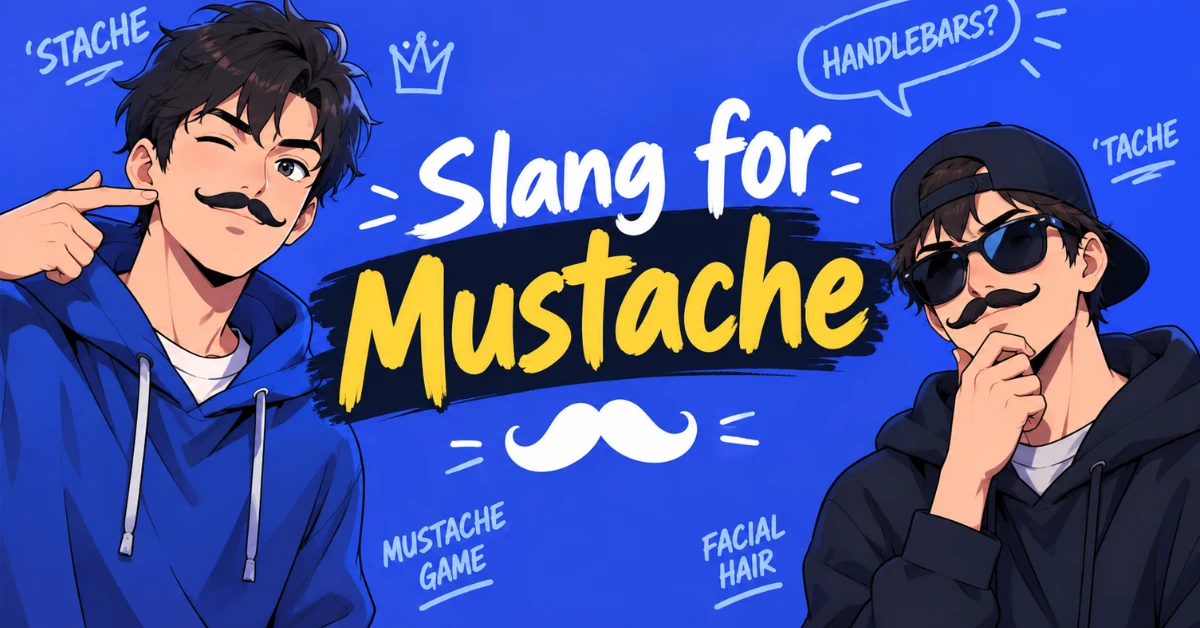
If you’re wondering about slang for mustache, the most common answer is “stache,” but the vocabulary goes much further. You’ll also hear playful names such as cookie duster, lip sweater, soup strainer, and flavor saver. These expressions describe facial hair with humor, personality, and sometimes a little friendly teasing.
As someone who has spent years studying informal language, slang, and how everyday expressions evolve, I find mustache vocabulary especially interesting. A simple patch of upper lip hair can become a grooming style, a joke, a social-media caption, or even a pop-culture reference. Below, you’ll find the most useful mustache nicknames, what they imply, and when each expression makes sense.
Quick Reference Table
| Slang Term | Meaning | Tone |
| Stache | Short form of mustache | Casual |
| Cookie Duster | Funny nickname suggesting crumb-catching | Humorous |
| Lip Sweater | Thick hair covering the upper lip | Playful |
| Crumb Catcher | Mustache that catches food | Joking |
| Flavor Saver | Humorous food-related nickname | Funny |
| Mouth Brow | Mustache compared with an eyebrow | Meme-style |
| Soup Strainer | Thick mustache jokingly associated with food | Old-school |
| Face Caterpillar | Thick, prominent mustache | Playful |
| Lip Rug | Hairy covering over the lip | Humorous |
| Nose Neighbor | Hair directly below the nose | Internet humor |
| Fuzz Bar | Small fuzzy mustache growth | Casual |
| Gentleman’s Stripe | Stylish, refined mustache | Complimentary |
| Retro Stache | Vintage-looking mustache | Trendy |
| Mini Beard | Small mustache resembling a tiny beard | Informal |
| Vintage Whisker | Classic-looking facial hair | Nostalgic |
The most established expressions tend to describe the mustache’s shape, thickness, location, or relationship to food. “Stache” is the straightforward everyday abbreviation, while expressions such as “soup strainer” and “cookie duster” lean much more heavily into humor. “Mo” is another established term, particularly associated with Movember.
17 Popular Slang Terms for Mustache
Mustache slang ranges from genuinely common abbreviations to playful expressions that are better understood as jokes than standard vocabulary. The important distinction is context: “stache” can comfortably appear in casual conversation, while something like “face caterpillar” is deliberately humorous.
The list below combines the recurring terms found across the current competitive results. Some are common enough to recognize immediately; others are niche, meme-like, or generation-specific.
Stache
“Stache” is the clearest casual shortening of mustache. It works in texts, captions, barbershop conversations, and compliments such as “Nice stache.” It has a relaxed feel without necessarily being insulting or overly silly, which makes it the safest slang choice on this list for everyday informal conversation.
Cookie Duster
“Cookie duster” is a humorous nickname based on the idea that a mustache can brush against or collect crumbs while eating. It has an old-school, joking quality and is better suited to teasing friends than formal descriptions. Think playful barbershop humor rather than a technical grooming term.
Lip Sweater
“Lip sweater” compares a thick patch of facial hair to a tiny sweater sitting over the upper lip. The expression is intentionally visual and silly, making it popular in humorous conversations and memes. It usually describes a noticeable or fuller mustache rather than barely visible facial fuzz.
Crumb Catcher
“Crumb catcher” jokingly suggests that the mustache catches food particles while someone eats. It belongs to the same humorous family as “cookie duster” and “soup strainer.” Because the expression can sound teasing, it works best among people who already share a relaxed sense of humor.
Flavor Saver
“Flavor saver” turns the food-catching joke into a playful compliment or roast. The idea is that bits of food or flavor somehow remain trapped in the mustache. It is clearly informal, so use it with friends or in humorous content rather than professional communication.
Mouth Brow
“Mouth brow” is an internet-style comparison: if an eyebrow sits above the eye, this joking expression treats a mustache like an eyebrow for the mouth. It has a meme-friendly sound and is better understood as playful slang than as a traditional name for facial hair.
Soup Strainer
“Soup strainer” is one of the best-known humorous mustache nicknames. The joke imagines a thick mustache filtering soup or catching food before it reaches the mouth. Historical slang references also document “soup-strainer” as a term for a mustache.
Face Caterpillar
“Face caterpillar” describes a prominent, hairy mustache by comparing its shape to a caterpillar. It is deliberately exaggerated, so the term is mostly appropriate for joking around. The expression appears in current online slang lists and is presented as a playful description of thick facial hair.
Lip Rug
“Lip rug” compares a thick mustache to a miniature rug covering the upper lip. It is easy to understand even if someone has never heard it before, which explains its appeal as humorous slang. It is playful rather than formal and can sound teasing depending on delivery.
Nose Neighbor
“Nose neighbor” is a whimsical way of pointing out that a mustache lives directly underneath the nose. The phrase fits internet humor because it creates a simple visual relationship between two facial features. It is best used casually, especially in jokes, captions, and friendly conversations.
Fuzz Bar
“Fuzz bar” describes small or developing mustache growth. Unlike “soup strainer,” which suggests a thick mustache, this expression works better for a newer or lighter patch of upper-lip hair. It has a playful internet-style quality and is not appropriate for formal grooming terminology.
Upper Lip Beard
“Upper lip beard” is a humorous way to describe a mustache as though it were a miniature beard restricted to the upper lip. It is easy to understand, although “mustache” remains the standard term. This phrase is better treated as informal descriptive slang than established technical vocabulary.
Gentleman’s Stripe
“Gentleman’s stripe” presents the mustache positively, emphasizing style rather than food jokes or teasing. It evokes a neat, polished, classic appearance and can work nicely as a humorous compliment. Current slang lists associate the expression with a classy or stylish mustache.
Retro Stache
“Retro stache” points toward a vintage-inspired mustache, particularly styles associated with older grooming trends. It is useful when the goal is to describe an aesthetic rather than simply identify facial hair. The expression naturally connects mustache slang with vintage fashion and pop-culture nostalgia.
Mini Beard
“Mini beard” humorously treats a small mustache as a tiny version of a full beard. It can describe early facial-hair growth or simply be used as a playful nickname. Because it is informal, the phrase works better in jokes and casual conversation than serious grooming advice.
Lip Hedge
“Lip hedge” exaggerates a bushy mustache by comparing it to vegetation growing across the upper lip. It is intentionally silly and works primarily as humorous slang. Current competitor research labels the expression as declining, suggesting it may sound less familiar than simpler terms such as “stache.”
Vintage Whisker
“Vintage whisker” gives a mustache an old-fashioned, nostalgic character. It can describe classic facial-hair styling without being insulting, especially when discussing vintage fashion, old movies, or traditional grooming. It is more descriptive than mainstream slang, so context helps the reader understand the intended tone.
The Classic Terms Everyone Still Uses
The classic side of mustache slang includes expressions that are easy to recognize even outside internet culture. Stache, soup strainer, cookie duster, and lip sweater repeatedly appear in current results, while “stache” is particularly straightforward because it is simply a shortened form of “mustache.”
These older expressions often rely on visual humor. A thick mustache becomes a “soup strainer” because of where it sits while eating; a “cookie duster” turns the same facial hair into a fictional cleaning tool. Their staying power comes from being instantly understandable without much explanation.
The Newer, More Playful Slang
Newer expressions tend to lean into meme culture, exaggerated imagery, and social-media humor. Mouth brow, face caterpillar, nose neighbor, and similar terms are less about traditional vocabulary and more about creating a funny mental picture of facial hair.
That doesn’t mean every newer term is universally popular. Slang changes quickly, and a phrase can feel current in one online community while sounding completely unfamiliar elsewhere. That’s why the safest modern choice remains “stache,” while more creative expressions should be treated as playful rather than universal.
Generational Slang Comparison
Mustache slang isn’t used identically across generations. Current competitor research groups expressions such as mouth brow and face caterpillar with younger meme-oriented language, while flavor saver, lip rug, soup strainer, and crumb catcher represent different generations of playful humor.
The bigger lesson is that slang reflects culture. Social media accelerates new expressions, while older nicknames survive through family jokes, barbershops, movies, and everyday speech. If someone doesn’t recognize a term, that doesn’t necessarily mean it’s wrong—it may simply belong to a different social or generational vocabulary.
Gen Z
Gen Z-oriented slang often favors short, visual, meme-friendly expressions. Terms such as “mouth brow” and “face caterpillar” fit that style because they create an immediate image. However, online popularity can be temporary, so a trendy expression shouldn’t automatically be treated as universally established slang.
Millennials
Millennial-oriented humor in the competitor research includes terms such as “flavor saver” and “lip rug.” These expressions blend traditional joking with internet-era language. They tend to sound playful rather than genuinely technical, making them useful for captions, jokes, and casual conversations.
Older Generations
Older speakers are more likely to recognize traditional humorous expressions such as “soup strainer” and “crumb catcher.” These terms existed independently of today’s social-media environment and often sound like classic barbershop or family humor rather than modern meme language.
How to Use Slang Naturally Without Sounding Awkward
The easiest way to use mustache slang naturally is to match the expression to the relationship and setting. “Nice stache” is a simple casual compliment, while “your soup strainer is working overtime” is clearly a joke. The more exaggerated the term, the more important the social context becomes.
If you’re unsure, choose the least loaded expression. “Stache” is casual but recognizable, whereas food-related nicknames or teasing comparisons can be interpreted differently depending on the person. Slang works best when it adds personality instead of making someone uncomfortable.
Match the Tone
Use playful expressions in relaxed situations where humor is already part of the conversation. A funny nickname can land perfectly between friends but feel strange when introduced during a serious discussion. Tone often matters more than the slang itself.
Understand the Context
A term can be affectionate, humorous, outdated, or insulting depending on who says it and how. Before repeating an unfamiliar expression, consider where you encountered it and how the original speaker used it. Online slang especially can change meaning quickly.
Consider the Social Setting
Barbershops, group chats, captions, memes, and friendly conversations give slang more room to breathe. Professional emails, academic assignments, and formal reports generally call for standard language. Competitor research makes the same distinction between informal slang and professional communication.
Common Slang Mistakes
One common mistake is assuming every term labeled “slang” is equally common. It isn’t. Some expressions, particularly “stache,” are broadly recognizable, while others are niche, humorous, generational, or declining. Treating every creative nickname as mainstream can make an otherwise natural sentence sound forced.
Another mistake is using teasing language without knowing the audience. A harmless joke between friends may not feel harmless to a stranger. Current competitor pages also caution against outdated or offensive expressions and recommend paying attention to context.
Using Outdated Slang
Older expressions can be fun, but they may sound unusual to younger listeners. That doesn’t make them useless; it simply means you should understand their cultural context. If you’re writing for a broad U.S. audience, pair obscure slang with a clear explanation.
Using Slang in Formal Writing
Slang generally belongs in informal communication, creative writing, social captions, dialogue, or humorous content. A professional email or academic paper usually benefits from standard vocabulary. When in doubt, “mustache” is clearer and more universally appropriate.
Overusing Slang
Packing every sentence with slang can make the writing feel artificial. A better approach is to use one memorable expression where it genuinely adds humor or personality, then return to normal language. Natural slang feels effortless; forced slang feels like someone trying too hard.
FAQs
Is stash slang for mustache?
Yes. “Stash” is a common informal short form of
What is another name for a mustache?
Moustache, ’stache, upper-lip hair, or facial hair.
Is mo slang for mustache?
Yes, “mo” can be informal slang for mustache, especially in Australian and British English.
What’s another word for mustache?
Moustache, ’stache, whiskers, or upper-lip hair.

Daniel Parker is a writer and language enthusiast with a passion for modern slang, internet culture, and the way people communicate online.
As the creator and contributor at posmeaningslang.com, Daniel focuses on making slang words, phrases, abbreviations, and online expressions easier to understand. His goal is to provide clear definitions, useful examples, and simple explanations that help readers understand the language they encounter every day.
Daniel enjoys exploring how language evolves across social media, texting, gaming, and online communities. He believes that understanding modern slang isn’t just about knowing words—it’s about understanding the context and culture behind them.
Through posmeaningslang.com, Daniel aims to create a helpful and easy-to-use resource for anyone looking to understand today’s slang and internet language.
Areas of Interest: Slang • Internet Language • Social Media • Modern Communication • Language & Culture